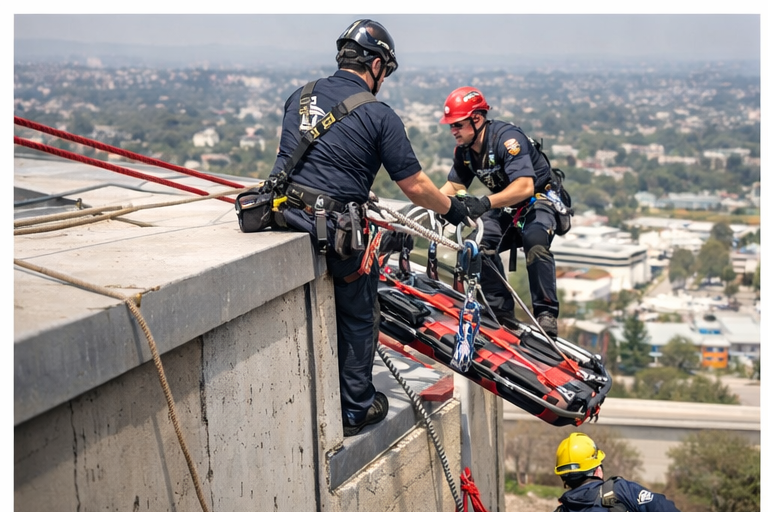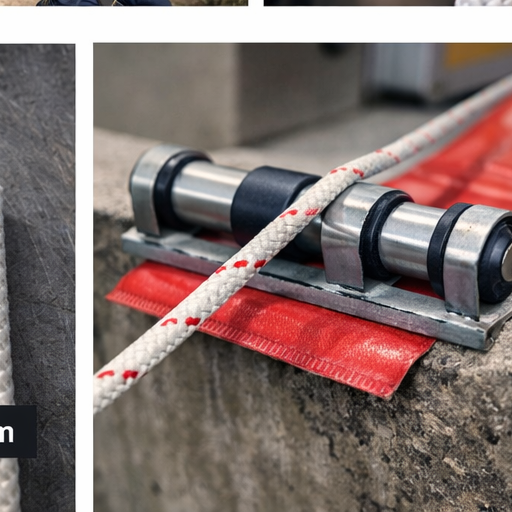






High-angle and confined space rescues present some of the most demanding conditions in emergency response. Limited access, restricted movement, and complex system layouts require equipment that behaves consistently under load. In these environments, static rope has become the preferred choice for fire and rescue teams.
This preference is not theoretical. It is based on how static rope supports control, stability, and efficiency when margins for error are small.
Predictable Load Behavior in Vertical Systems
In high-angle environments, even small amounts of unexpected movement can have significant consequences. Rope stretch introduces variability that makes precise positioning more difficult.
Static rope minimizes this variability by:
-
Limiting elongation under load
-
Maintaining consistent tension
-
Reducing rebound and oscillation
This predictable behavior allows rescuers to focus on system management and patient care rather than compensating for rope movement.
Improved Control During Raising and Lowering
Controlled raising and lowering are central to both high-angle and confined space rescue. Static rope supports smooth, deliberate movement that is easier to manage with mechanical devices.
Operational benefits include:
-
More efficient hauling
-
Easier lock-offs
-
Reduced system reset frequency
These advantages become especially important during extended operations or when working with limited personnel.
Advantages in Confined Spaces
Confined spaces magnify the effects of rope movement. Oscillation or stretch can cause loads to contact walls, equipment, or rescuers in tight environments.
Static rope helps mitigate these risks by maintaining stable positioning. This stability improves safety for both patients and rescuers navigating restricted access points.
Training and Standardization Benefits
Standardizing on static rope simplifies training and system design. When rope behavior is consistent, teams can focus on mastering techniques rather than adapting to equipment variability.
Standardization supports:
-
Interoperability between teams
-
Reduced training complexity
-
More reliable outcomes under stress
For many departments, this consistency is as valuable as the rope’s physical properties.
Conclusion
Static rope provides the control, predictability, and efficiency required for high-angle and confined space rescue. Its performance characteristics align with the demands of technical rescue, making it the logical choice for fire and rescue professionals operating in complex environments.