






Rope selection is one of the most consequential decisions in technical rescue. While dynamic rope plays a critical role in climbing and fall-arrest scenarios, rescue operations place very different demands on rope systems. In most fire and rescue environments, the priority is not absorbing fall energy, but maintaining control, predictability, and stability while moving people and equipment.
This difference is why static and low-stretch rope has become the standard for rescue work. Stretch, which is beneficial in climbing, often introduces unwanted movement and uncertainty in rescue systems. When loads are heavy, edges are sharp, and environments are confined, even small amounts of elongation can affect safety and efficiency.
Understanding why static rope is preferred requires looking beyond basic definitions. It requires examining how stretch affects load control, edge management, hauling systems, and patient movement. This article explains those factors and why, in rescue operations, stretch can be a liability rather than a safeguard.
How Rope Stretch Changes Load Control
When a rope stretches under load, the load does not respond immediately to operator input. Instead, energy is absorbed by elongation and then released as the rope settles. In climbing, this behavior reduces peak forces during a fall. In rescue, where movement is deliberate and controlled, it often creates problems.
During a lowering operation, a dynamic rope may continue to elongate after the system appears to be locked off. As tension equalizes, the load may drop slightly. This movement may only be a few inches, but in rescue environments, inches matter.
Loss of precise load control can lead to:
-
Unexpected movement after a stop is applied
-
Difficulty holding exact positioning near edges or obstacles
-
Reduced confidence in system behavior under load
Static and low-stretch ropes limit elongation, allowing loads to respond immediately. When the system is stopped, the load remains where it is expected to remain. This predictability is foundational to safe rescue operations.
Edge Transitions and Abrasion Risk
Edges are one of the most critical risk points in rope rescue. They concentrate forces, increase abrasion, and often limit visibility. Rope stretch complicates edge management by changing how the rope interacts with the contact point as load is applied.
As a dynamic rope elongates, the contact point at the edge can shift. This movement may pull the rope into sharper or more abrasive surfaces than anticipated during system setup. Over time—or even during a single operation—this can accelerate sheath wear and increase the risk of damage.
Stretch at the edge can also cause sudden movement during transitions. A rescuer stepping onto rope may experience a brief drop as elongation is taken up, affecting balance and positioning at a critical moment.
Static rope minimizes these variables by maintaining a consistent relationship with the edge once loaded. This stability makes abrasion management more predictable and edge transitions safer.
Efficiency in Hauling Systems
Hauling systems rely on mechanical advantage and efficient force transfer. Rope stretch works against both. When a rope elongates during hauling, part of the input energy goes into stretching the rope rather than moving the load.
In practical terms, this can result in:
-
Reduced effective mechanical advantage
-
More frequent system resets
-
Increased rescuer fatigue during long raises
Static rope transmits force directly to the load, allowing each pull to produce measurable movement. This efficiency becomes especially important during extended operations or when staffing is limited.
Patient Stability and Movement
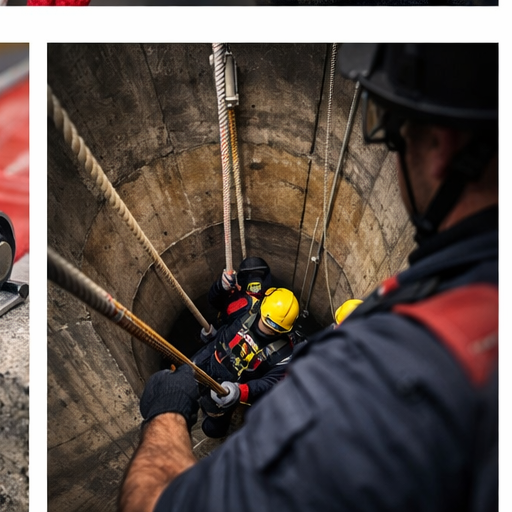
Rescue operations often involve patients who are injured, immobilized, or medically fragile. Minimizing unnecessary movement is critical. Rope stretch can cause suspended loads to oscillate as elongation occurs and tension fluctuates.
Even minor oscillation can:
-
Increase patient discomfort
-
Complicate spinal or medical management
-
Make guiding a litter through obstacles more difficult
Static rope maintains consistent tension throughout the system, resulting in smoother raises and lowers. Reduced lateral movement improves control and allows rescuers to focus on patient care rather than compensating for rope behavior.
The Appropriate Role of Dynamic Rope in Rescue
Dynamic rope does have limited, appropriate uses in rescue systems. It may be suitable for belay lines intended to arrest a fall or in specific environments where controlled elongation is intentionally incorporated.
Problems arise when dynamic rope is used as a primary working line out of convenience or familiarity. Rescue systems differ fundamentally from climbing systems. Loads are heavier, redundancy is built in, and movement is controlled rather than dynamic.
For this reason, most fire and rescue teams standardize on static or low-stretch rope for primary operations and reserve dynamic rope for clearly defined secondary roles.
Why Static Rope Is the Rescue Standard
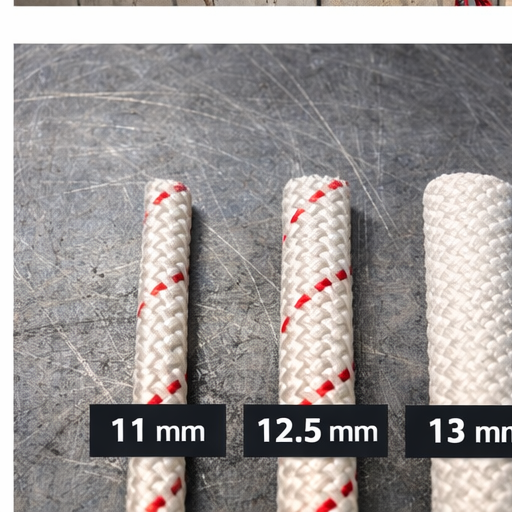
Across fire departments, search and rescue teams, and technical rescue organizations, static rope is preferred because it behaves predictably under load. It integrates reliably with rescue hardware, supports established training protocols, and aligns with NFPA standards.
Purpose-built static rescue ropes balance strength, durability, and controlled elongation. When selected and used correctly, they provide a stable foundation for a wide range of rescue scenarios.
Conclusion
Stretch can save lives in climbing environments, but in rescue operations it often introduces unnecessary risk. Reduced control, increased abrasion, inefficiency, and patient movement are all consequences of excessive elongation.
Static and low-stretch ropes address these challenges by providing predictable, stable performance. For rescue professionals operating in complex environments, that predictability is essential. Rope selection is not just about strength—it is about behavior, and in rescue, controlled behavior matters most.