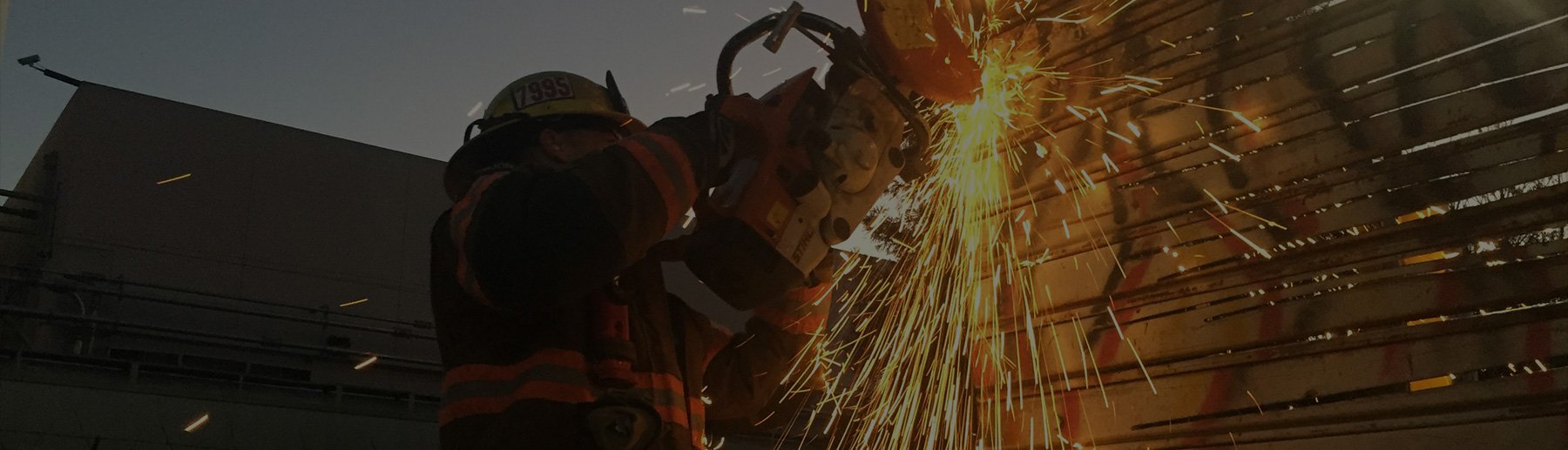




When you pick up a rescue saw on the fireground, you’re not just holding a tool—you’re holding speed, access, and control.
But here’s the reality: most performance issues with rescue saws don’t come from the saw itself. They come from how it’s used.
You can have the best blade, a perfectly tuned saw, and still struggle if your technique or decision-making is off. And in real-world conditions, those mistakes don’t just slow you down—they cost time you don’t have.
If you want to get more effective with a rescue saw, it starts with recognizing where things typically go wrong.
Trying to Force the Cut Instead of Letting the Saw Work
One of the most common mistakes you’ll see—especially under pressure—is trying to muscle the saw through the material.
It’s a natural reaction. The noise, the resistance, the urgency of the moment—it all pushes you to apply more force.
But rescue saws aren’t designed to be forced.
When you lean into the saw too aggressively, you reduce blade speed. And when blade speed drops, cutting efficiency drops with it. The saw starts to bind, the cut slows down, and suddenly you’re working harder for worse results.
When you’re operating correctly, the saw should feel like it’s pulling itself through the material. Your job isn’t to force it—it’s to guide it.
Once you feel that difference, your cuts become smoother, faster, and far more controlled.
Using the Wrong Blade for the Job
You can’t expect one blade to handle every situation equally well.
Still, this mistake happens all the time. A firefighter grabs whatever blade is already mounted and goes to work, even if it’s not ideal for the material in front of them.
The result is predictable. Slower cuts, increased resistance, and unnecessary wear on both the blade and the saw.
Different materials demand different approaches. Roofing, metal, concrete, and reinforced structures all behave differently under a saw. If your blade isn’t matched to the task, you’re putting yourself at a disadvantage before you even start.
Over time, learning how each blade performs—and when to use it—becomes one of the biggest factors in your efficiency.
Poor Body Positioning During the Cut
You can often tell how effective someone will be with a rescue saw just by watching how they stand.
If your stance is off, everything else becomes harder. Your control decreases, your balance suffers, and your ability to manage the saw through the cut becomes inconsistent.
When you’re positioned correctly, you’re stable, slightly offset, and in control of the saw’s movement from start to finish. You’re not reaching or overextending—you’re working from a position of strength.
This matters more than most people realize. Good positioning doesn’t just improve your cuts—it reduces fatigue and helps you stay effective longer.
Starting the Cut Without Proper Control
The beginning of the cut is where a lot of problems start.
If you rush into it, the blade can skip, wander, or catch in ways that throw off the entire process. Once that happens, you’re no longer in full control—you’re reacting instead of operating.
A clean, controlled start sets the tone for everything that follows.
When you take the time to establish that first point of contact properly, the saw tracks more consistently. The cut stays cleaner. And you avoid the kind of instability that slows everything down.
Letting the Saw Lose RPM During the Cut
Rescue saws are built to operate at high speed. That speed is what allows the blade to cut efficiently through tough materials.
When RPM drops, performance drops with it.
This often happens when too much pressure is applied or when the operator doesn’t maintain consistent throttle control. The saw starts to bog down, the blade struggles to clear material, and the entire process becomes less effective.
You should always be aware of how the saw sounds and feels. A steady, strong RPM means you’re operating correctly. Any drop in performance is usually a sign that something needs to be adjusted—either your pressure, your positioning, or your approach.
Ignoring Blade Condition and Wear
Even the best technique won’t overcome a worn or damaged blade.
Over time, blades lose their effectiveness. They become dull, less efficient, and more prone to binding. If you’re not paying attention to that, you may find yourself working harder just to achieve the same result.
This isn’t always obvious in the moment. You might assume the material is the problem or that you need to apply more force.
But often, the issue is the blade itself.
Taking the time to inspect your blade before and after use helps you avoid these situations. A sharp, well-maintained blade makes everything easier.
Rushing Instead of Reading the Situation
Speed matters—but rushing can work against you.
When you approach a cut without taking a moment to assess what you’re dealing with, you increase the chances of making the wrong decision. That might mean choosing the wrong angle, the wrong blade, or the wrong approach entirely.
A few seconds of observation can save you far more time in execution.
When you slow down just enough to read the material, understand the structure, and plan your approach, your cuts become more efficient and more controlled.
What Effective Saw Operation Actually Looks Like
When everything comes together, using a rescue saw feels different.
You’re not fighting the tool. You’re working with it.
The blade moves cleanly through the material. Your body stays balanced and controlled. The saw maintains consistent power from start to finish.
There’s no wasted motion. No unnecessary force. Just steady, effective progress.
That’s the level of control you should be aiming for.
Final Thoughts
Rescue saw performance isn’t about working harder—it’s about working smarter.
If you can avoid these common mistakes and focus on control, positioning, and proper tool use, you’ll see a noticeable difference in how you operate.
And when you’re more efficient with your saw, you’re not just improving your own performance—you’re making your entire team more effective.
That’s what really matters when the pressure is on.