






When your rescue saw is needed, it’s not optional—it has to work.
There’s no warm-up period on the fireground. No second chances. If the saw doesn’t start, bogs down mid-cut, or underperforms when you need it most, you’ve already lost valuable time.
The reality is simple: most saw failures aren’t random. They’re preventable.
If you want your rescue saw to perform consistently, maintenance can’t be something you think about after the fact. It has to be part of how you operate.
Why Maintenance Directly Impacts Performance
A rescue saw is a high-demand tool. It operates in heat, debris, dust, and unpredictable conditions. Every time you use it, it takes on wear—whether you notice it or not.
Over time, that wear shows up in subtle ways. The saw takes longer to start. The throttle response feels weaker. The cut isn’t as smooth or as fast as it should be.
These small changes are early warnings.
If you ignore them, they turn into bigger problems—like a saw that won’t start when you’re standing in front of a reinforced door or trying to make a critical ventilation cut.
Maintenance isn’t just about keeping the saw running. It’s about keeping it reliable.
It Starts Before You Even Pull the Cord
The condition of your saw before you start it matters just as much as how it performs during a cut.
When you pick up the saw, you should already have confidence in it. That confidence comes from knowing it’s been checked, maintained, and kept ready.
You should be able to look at it and immediately spot anything out of place—loose components, visible wear, or anything that doesn’t feel right.
This kind of awareness doesn’t take long to build, but it makes a major difference. When you’re familiar with your saw, problems stand out quickly.
Fuel and Engine Performance Matter More Than You Think
A lot of performance issues start with fuel.
If the fuel mixture isn’t correct or has been sitting too long, it affects how the engine runs. You may notice harder starts, inconsistent power, or the saw struggling to maintain RPM during a cut.
These issues don’t always show up immediately. Sometimes the saw will start, but it won’t perform the way it should when it’s under load.
Keeping fresh, properly mixed fuel in your saw helps eliminate one of the most common sources of problems.
And when the engine runs clean, everything else becomes more predictable.
Airflow Is What Keeps Your Saw Alive
Rescue saws rely on airflow to operate properly. Dust, debris, and particles are constantly being pulled into the system, especially during cutting operations.
Over time, that buildup restricts airflow. The engine has to work harder, performance drops, and the risk of overheating increases.
You might not notice it right away. The saw will still run—but it won’t feel as responsive.
Cleaning and maintaining the air intake system helps the engine breathe the way it’s supposed to. When airflow is consistent, performance stays consistent.
Your Blade Is Half the Equation
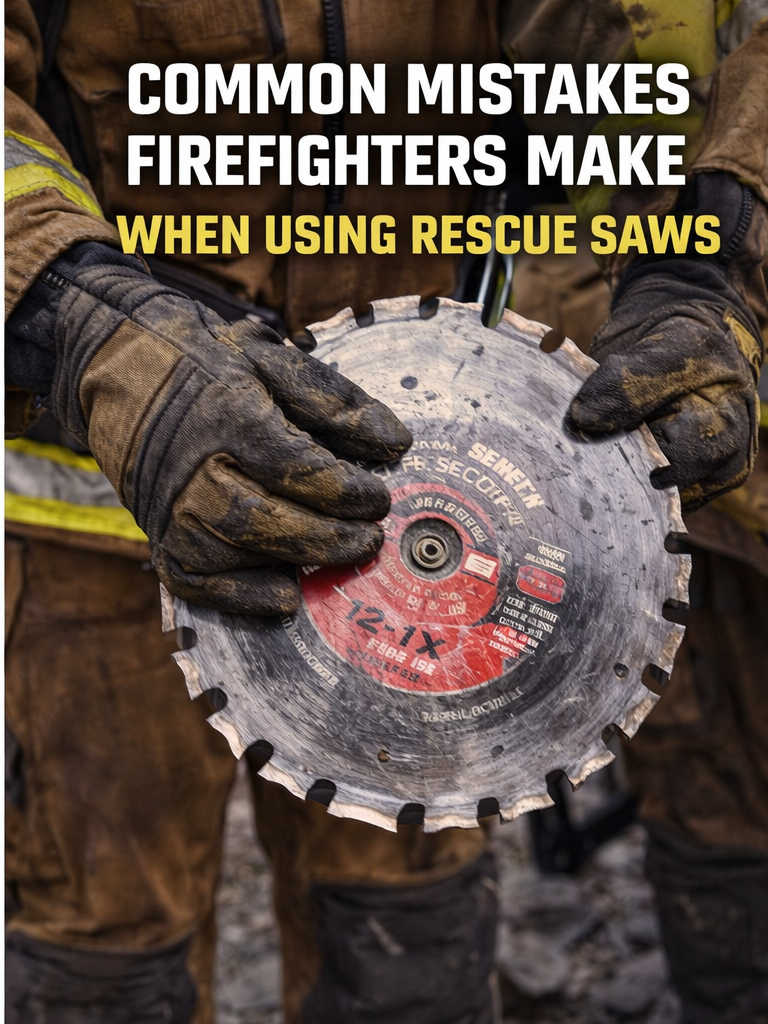
You can have a perfectly maintained saw, but if your blade is worn down, you’re still going to struggle.
A dull or damaged blade changes everything. The saw has to work harder, cuts take longer, and the chances of binding increase.
This often leads firefighters to apply more pressure, which only makes the problem worse.
When your blade is in good condition, the saw does what it’s designed to do. The cut feels smoother. The material clears more easily. And your overall efficiency improves.
Taking a moment to check the blade before use can save you a lot of frustration later.
What You Notice During Operation Matters
Maintenance isn’t just something that happens before or after use—it’s something you pay attention to while you’re operating.
The way the saw sounds, feels, and responds tells you a lot.
If the engine struggles to maintain RPM, if the throttle response feels delayed, or if the cut isn’t progressing the way it should, those are signals.
You don’t need to overanalyze it. You just need to recognize when something feels off.
The more experience you have, the easier this becomes. You start to pick up on small changes that others might miss.
After the Job Is Where Reliability Is Built
Once the operation is over, it’s easy to move on and forget about the saw.
But this is where reliability is built.
Taking a few minutes to clean off debris, check for wear, and make sure everything is in working order sets you up for the next call.
It’s not about doing a full teardown every time. It’s about staying consistent.
When maintenance becomes routine, your saw stays ready without requiring major effort.
Confidence Comes From Consistency
When your rescue saw is properly maintained, you don’t think twice about it.
You pick it up, start it, and go to work.
There’s no hesitation. No second-guessing. No concern about whether it’s going to perform.
That level of confidence comes from consistency—doing the small things over and over again until they become second nature.
Final Thoughts
Your rescue saw is one of the most important tools you rely on. When it works, it gives you speed and control. When it doesn’t, it slows everything down.
The difference almost always comes down to maintenance.
If you stay consistent, pay attention to the details, and treat your saw like the critical tool it is, it will be ready when you need it.
And when that moment comes, that’s all that matters.