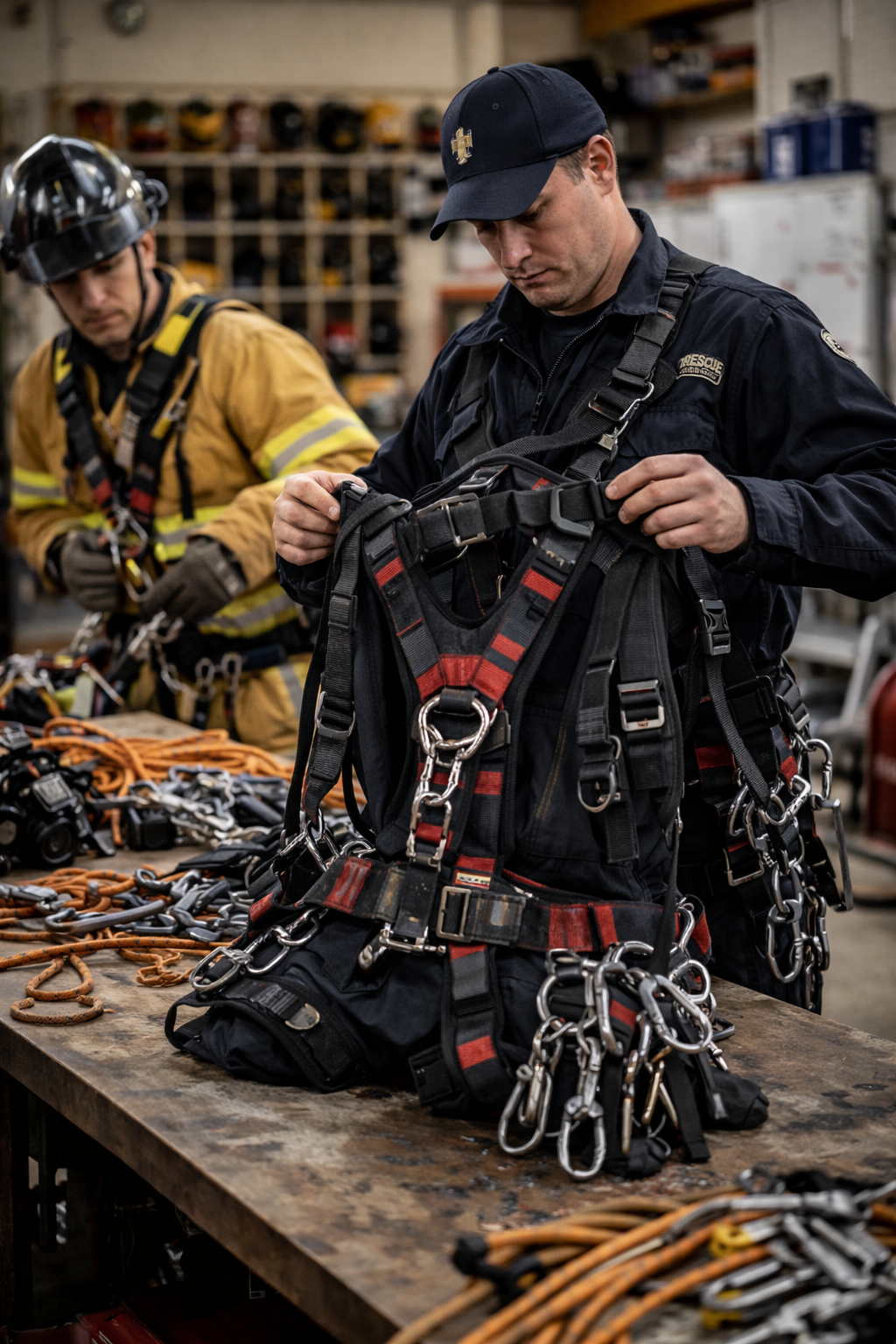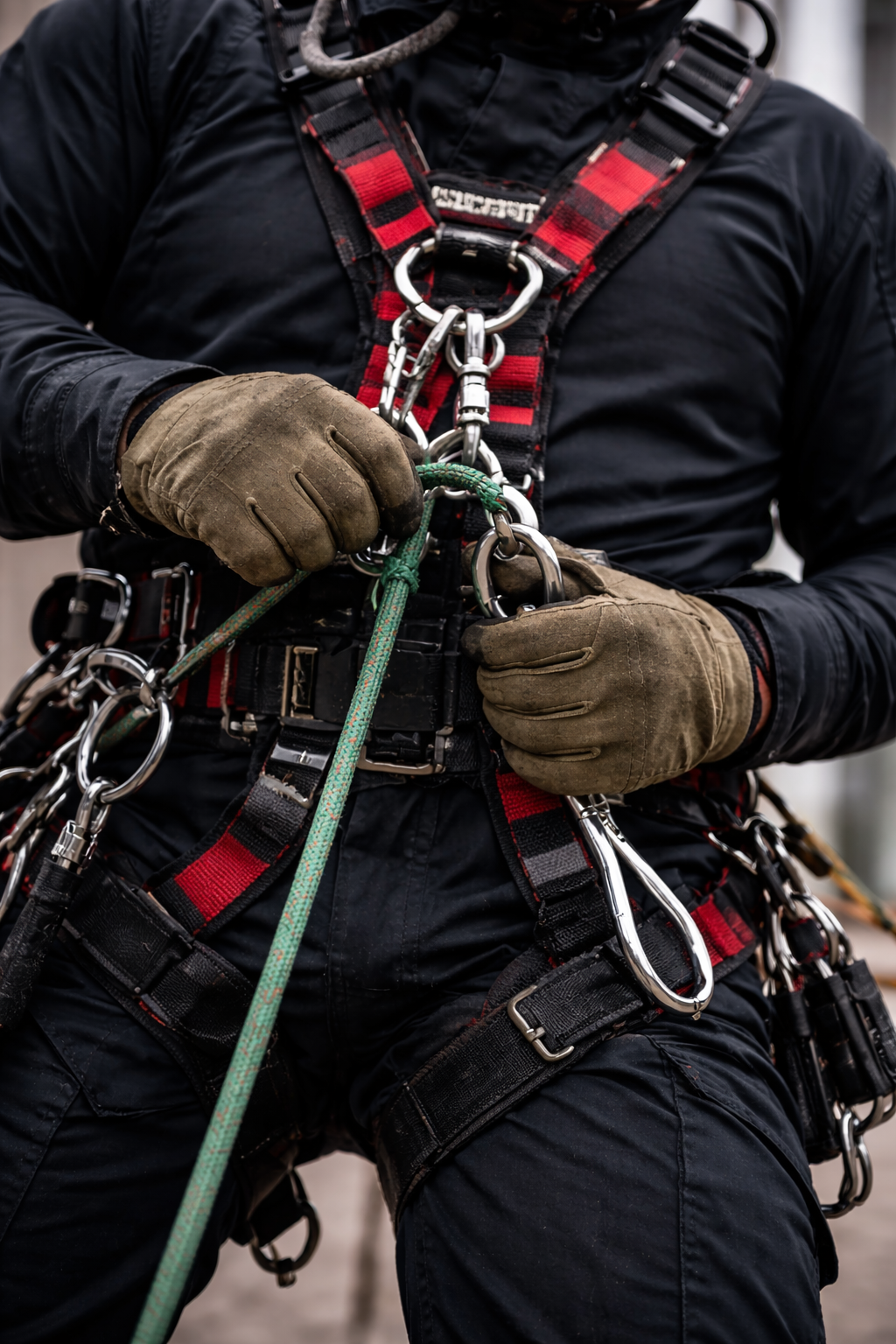






On paper, fall arrest harnesses and rescue harnesses can look similar enough to cause confusion. Both wrap around the body. Both connect to rope or hardware. Both are rated to hold weight.
In real fire-rescue operations, that similarity disappears fast.
Fall Arrest Harnesses Are Designed for a Single Moment
Fall arrest harnesses are built around one event: stopping a fall. They’re designed to catch a worker, limit impact forces, and hold them until help arrives.
That design works when suspension time is short and movement is minimal.
Fire-rescue operations are the opposite.
Rescue Harnesses Assume Suspension Is Part of the Job
In fire-rescue, suspension isn’t an accident — it’s expected. Firefighters are lowered, raised, repositioned, and sometimes left hanging while systems are adjusted or patients are packaged.
Rescue harnesses are built with that reality in mind. They support:
-
Upright body positioning
-
Extended suspension
-
Repeated transitions
-
Active movement under load
Fall arrest harnesses generally don’t.
The Problem Shows Up When the Operation Slows Down
At first, a fall arrest harness may feel fine. Then time passes. Pressure builds in the legs. Maintaining posture takes effort. Circulation becomes a concern.
Firefighters don’t usually notice this immediately — they notice it once they’ve been hanging longer than planned. That’s when the harness stops being background equipment and starts demanding attention.
Suspension Trauma Is a Real Operational Risk
Suspension trauma isn’t theoretical. Poor load distribution can restrict blood flow, especially during prolonged hanging. Rescue harnesses reduce this risk by spreading load and supporting posture.
Fall arrest harnesses weren’t designed to manage suspension for long periods, and expecting them to do so adds unnecessary risk to already complex operations.
Using the Wrong Harness Forces Workarounds
When firefighters use fall arrest harnesses for rescue, they often compensate by:
-
Constantly shifting position
-
Hanging on arms or core muscles
-
Rushing tasks to reduce hang time
None of those behaviors improve safety. They’re signs the equipment doesn’t match the mission.
The Right Tool Reduces Cognitive Load
When a harness supports the body properly, firefighters can focus on communication, system management, and patient care. When it doesn’t, attention gets pulled inward.
Fire-rescue work already demands enough mental bandwidth. Equipment shouldn’t consume more of it than necessary.