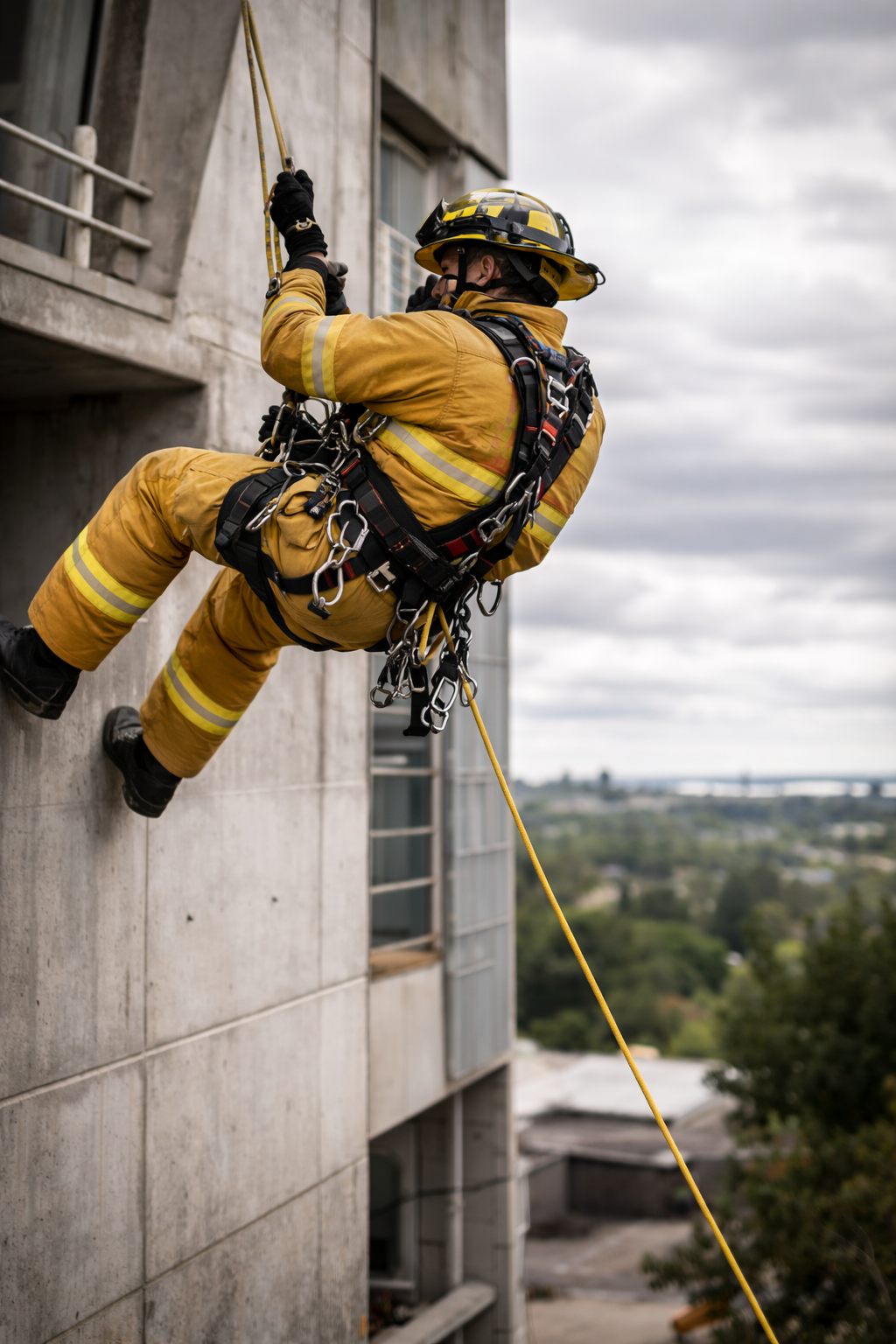







Most firefighters learn how to put a harness on long before they learn what it’s actually doing once they’re suspended. In training, it’s easy to focus on knots, systems, and commands. The harness fades into the background. But once you’re hanging in space — especially for longer than planned — the harness becomes impossible to ignore.
Understanding how a rescue harness works isn’t about memorizing parts. It’s about understanding how your body behaves under load, and how the harness either supports that or works against it.
The Harness Becomes the Interface Between You and the System
When you’re on rope, every force acting on you travels through the harness first. Rope tension, movement, transitions, even subtle shifts in posture — all of it passes through webbing, stitching, and attachment points before your body ever feels it.
That’s why small differences in harness design create big differences in experience.
If the harness manages load well, you stay upright, balanced, and relatively relaxed. If it doesn’t, your body compensates. You engage muscles you shouldn’t have to. You fight rotation. You brace instead of work.
Over time, that effort adds up.
Where the Load Sits Determines How Long You Can Hang
One of the first things firefighters notice during extended suspension is where the harness carries their weight. Harnesses that concentrate load too low or too narrowly create pressure quickly. Legs go numb. Hips ache. Circulation suffers.
When load is distributed across the torso, hips, and thighs, the body tolerates suspension much better. You’re not constantly shifting or searching for relief. You can stay focused on the task instead of your own discomfort.
This isn’t about luxury. It’s about endurance. A firefighter who can remain functional under load is safer, more effective, and less likely to rush decisions just to get off the line.
Attachment Points Control Posture — Whether You Notice It or Not
Where you clip in determines how your body hangs. Front attachment points tend to keep you upright and controlled, which is why they’re preferred for most rescue systems. Rear attachment points behave very differently, often pulling you backward under load.
Side attachment points allow controlled leaning, which is useful for positioning work, but they aren’t meant to replace primary suspension points.
When firefighters clip into points that don’t match the task — often out of convenience or habit — the harness still holds them, but posture suffers. Over time, posture problems become fatigue problems.
Stitching and Webbing Do More Than “Hold”
Stitching patterns aren’t decorative. They’re engineered to distribute force evenly through the harness. When stitching begins to degrade, load paths change — even if nothing fails outright.
The same is true for webbing. Changes in stiffness, texture, or flexibility can indicate internal damage long before visible failure.
Experienced rescuers don’t just look for obvious cuts. They pay attention to how the harness feels during handling and under light load. Subtle changes often show up there first.
Padding Isn’t About Comfort — It’s About Staying Present
Padding reduces pressure points and helps maintain circulation, especially during longer hangs. Firefighters who’ve spent time suspended without adequate support know how quickly discomfort turns into distraction.
When your attention is split between the rescue and your own physical stress, performance suffers. Padding helps keep your attention where it belongs — on the operation.
Why Understanding the Harness Changes How You Use It
Firefighters who understand how their harness works tend to:
-
Inspect it more thoroughly
-
Adjust it more intentionally
-
Clip into it more deliberately
They don’t treat it as an accessory. They treat it as part of the system — because it is.