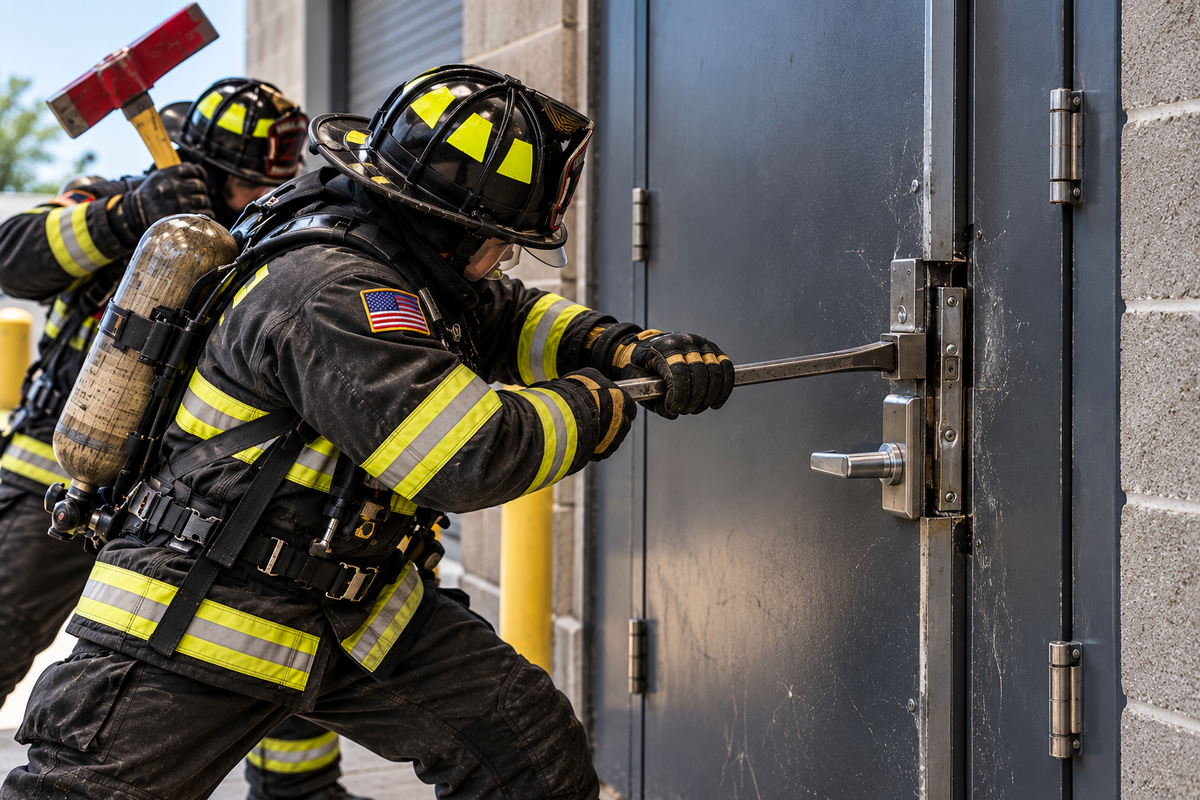







A firefighter can complete dozens of forcible entry evolutions, become comfortable using a Halligan bar, and consistently open a training door without necessarily being prepared to force an unfamiliar door on the fireground.
That is one of the challenges facing fire department training officers. Forcible entry is a perishable skill, but simply increasing the number of repetitions doesn't guarantee that firefighters are developing the right techniques.
In fact, repetitive training can reinforce poor habits when instructors fail to recognize mechanical errors, unrealistic shortcuts, or problems with how firefighters approach a secured door.
Some mistakes are obvious. A firefighter repeatedly loses tool purchase, fails to coordinate with a striking-tool operator, or struggles to generate effective leverage.
Others are more subtle. A firefighter may become so familiar with a particular training prop that they no longer perform a meaningful door assessment. Another may consistently defeat the simulated locking mechanism using a technique that would damage an actual wooden frame without producing useful progress.
The most common forcible entry training mistakes aren't always failures to open the door. They're failures to recognize whether the firefighter is using effective, repeatable techniques that will work beyond the training environment.
For training officers, understanding these mistakes is essential to developing firefighters who can adapt to different door constructions, locking arrangements, and operational conditions.
1. Skipping the Door Assessment Because the Firefighter Already Knows the Prop
One of the easiest bad habits to develop during forcible entry training is skipping the initial door assessment.
Think about what happens during a typical training session.
The instructor demonstrates the prop. Firefighters watch several evolutions, learning exactly where the simulated locking mechanism is located and how the door responds to force.
By the time the fifth or sixth firefighter approaches, there is little uncertainty left.
The firefighter knows the door is secured, understands its direction of swing, and has already observed the technique that produces a successful force.
Rather than assessing the door, they immediately begin placing their tools.
That might seem harmless during a controlled training evolution, but it removes a critical component of conventional forcible entry.
Why this becomes a problem
Actual doors do not come with instructors explaining their construction or locking arrangement.
A firefighter may encounter a door that appears secured but is unlocked. Another door may have additional locking points, unfamiliar hardware, or construction features that change the appropriate entry method.
Firefighters who become accustomed to approaching every door with a predetermined technique may overlook those differences.
The traditional forcible entry sequence—Try, Shock, Gap, Force, Clear, and Control—exists partly to encourage firefighters to evaluate the situation rather than immediately commit to a forcing operation.
Lou Comenale discusses the importance of maintaining that sequence in Stop Defeating the Prop: Force That Door!, published by Fire Engineering.
How instructors can correct it
Make door assessment part of the training evolution, even when the firefighter has already worked on that simulator.
Before beginning, ask the firefighter to identify the direction of swing, visible securing hardware, and factors that might influence the entry plan.
Instructors can also introduce scenario variations rather than allowing every evolution to begin with exactly the same assumptions.
The objective is to preserve the decision-making process that precedes physical tool work.
2. Treating Every Door Like a Steel Training Prop
Commercial forcible entry training doors offer considerable advantages. They can withstand repeated use and provide firefighters with opportunities to practice tool mechanics in a controlled environment.
However, their durability can also create unrealistic expectations.
A rigid steel simulator may tolerate movements that would damage or destroy portions of an actual residential doorframe.
For example, a firefighter may repeatedly place the Halligan's forks against a steel frame without experiencing significant damage to the training assembly.
If the firefighter uses the same approach against a wooden jamb, the tool may damage the frame or fail to establish the intended purchase.
In Breaking the Barrier: Overcoming Residential Forcible Entry Training Scars, Fire Engineering discusses how forgiving steel props can create problems when firefighters encounter real residential construction.
The issue is not that steel training equipment is ineffective.
It is that firefighters must understand the differences between the simulator and the actual door assemblies they encounter.
What instructors should emphasize
Training officers should explain how common construction materials respond to force.
A wood-frame door may allow the jamb or doorstop to split. A commercial steel frame anchored into masonry may provide far less movement. The securing hardware may also behave differently depending on the assembly.
When possible, departments should supplement reusable prop training with construction demonstrations using approved, safely installed door assemblies.
That gives firefighters a better understanding of what their simulator represents—and what it doesn't.
3. Using Brute Strength Instead of Mechanical Advantage
Forcible entry requires physical effort, but effective technique is not simply a matter of applying more force.
A Halligan bar is designed to provide mechanical advantage. Proper tool positioning allows firefighters to generate useful leverage without relying entirely on strength.
Unfortunately, some training environments unintentionally reward brute force.
An instructor may increase a simulator's resistance until firefighters begin struggling to open it. Instead of identifying problems with tool placement, the firefighter responds by pushing harder or asking the striking-tool operator to deliver more force.
The evolution becomes a physical contest rather than a lesson in tool mechanics.
Why this matters
When firefighters rely on strength to overcome poor positioning, they can develop several problems.
They may exhaust themselves unnecessarily, lose control of their tools, or fail to recognize that their efforts are not producing useful movement.
They may also become less effective when working in restricted spaces where aggressive body movement is difficult.
Understanding the Halligan's relationship between the applied force, fulcrum, and load is more valuable than simply learning to push harder.
Fire Engineering's The Ins and Outs of the Halligan provides a useful discussion of these mechanical principles.
How instructors can correct it
Evaluate tool placement and mechanical advantage before increasing difficulty.
If a firefighter struggles, examine whether the tool is positioned appropriately and whether the firefighter understands how the movement is supposed to work.
A properly designed training evolution should make correct technique meaningful.
Increasing resistance can be useful for experienced firefighters, but only when the added difficulty supports a specific training objective.
4. Failing to Maintain Tool Purchase
A firefighter may establish an effective initial position with a Halligan only to lose that position while applying force.
This is a common problem worth addressing during training.
The tool may begin slipping from its contact point, or the firefighter may unintentionally change the angle of force.
Rather than recognizing the loss of purchase, the firefighter may continue applying pressure.
In some cases, the tool suddenly releases.
That can create a hazardous situation for the firefighter and nearby personnel.
What causes the problem?
Several factors can contribute.
Poor initial positioning is one possibility. Another is misunderstanding how the tool should move as leverage develops.
Firefighters may also fail to recognize when the door or frame begins deforming, changing the contact between the tool and the assembly.
Training props with predictable resistance may not always expose these errors.
What instructors should watch for
Instructors should observe the entire forcing movement rather than only the point when the simulated lock releases.
Does the firefighter maintain control of the tool?
Does the tool remain positioned to provide useful mechanical advantage?
Does the firefighter recognize when the tool begins moving unexpectedly?
Does the firefighter stop and reassess when purchase is lost?
These observations are more useful than simply counting completed evolutions.
5. Losing Progress During the Forcing Operation
A successful forcible entry operation often involves creating an opening and maintaining it while the firefighter continues working.
However, firefighters sometimes fail to preserve the progress they have already made.
Consider a firefighter who establishes a partial gap but then removes the Halligan to reposition it.
If that opening is not maintained, the door may return toward its original position.
The firefighter is forced to repeat work that should have been preserved.
On some training props, the simulated assembly may not respond in the same way as an actual door under tension.
That can hide the problem.
The importance of capturing progress
In Stop Defeating the Prop: Force That Door!, Comenale identifies the failure to capture progress as a recurring problem during forcible entry training.
He also explains how certain resistance materials used in training props provide different feedback and encourage firefighters to recognize the importance of preserving an opening.
For instructors, the lesson is straightforward.
Firefighters should understand that achieving initial movement is not necessarily the same as completing the force.
A proper training evolution should account for what happens when pressure changes, tools are repositioned, or additional securing points remain.
How to train the skill
Rather than evaluating only whether the door opens, instructors should observe how firefighters manage each stage of the evolution.
When a firefighter loses previously established progress, the instructor should identify exactly what happened.
Was the tool removed prematurely?
Did the firefighter fail to recognize that the opening needed to be maintained?
Was the simulator's behavior different from what would occur with an actual door assembly?
Correcting these problems during training helps firefighters develop a better understanding of the complete forcing process.
6. Developing Shortcuts That Only Work on the Training Door
One of the most concerning forcible entry training mistakes occurs when firefighters become exceptionally good at manipulating one particular simulator.
They know where the resistance comes from, how the locking mechanism behaves, and which movement will release it.
Eventually, they discover shortcuts.
A firefighter may learn that a certain movement produces a quick release on the prop, even though that movement does not represent a reliable technique for actual doors.
The firefighter completes the evolution quickly and appears proficient.
But the apparent success can be misleading.
Why shortcuts are difficult to identify
Some shortcuts resemble legitimate adaptations.
An experienced firefighter may recognize that a certain technique is appropriate for a particular door construction.
That is different from exploiting a quirk in the simulator's design.
The distinction is whether the technique relies on sound mechanical principles that apply beyond that specific piece of equipment.
For example, a method that works against a rigid steel simulator may cause an actual wooden doorstop to fail before the firefighter obtains useful leverage.
A technique that works against a simulated locking mechanism may not produce the same result against commercial door hardware.
What instructors should do
Don't automatically reward a firefighter for completing an evolution faster than everyone else.
Ask whether the technique was mechanically sound.
If someone discovers an unusual shortcut, use it as an instructional opportunity.
Explain why it worked on the simulator, whether it would apply to an actual door, and what limitations or hazards it introduces.
The goal is not to discourage adaptability. It is to ensure firefighters understand the difference between adapting to construction and exploiting equipment behavior.
7. Poor Communication Between the Halligan and Striking-Tool Operators
Conventional two-person forcible entry requires coordination.
The firefighter operating the Halligan needs to control tool positioning and communicate with the firefighter providing striking force.
When those roles are poorly coordinated, the evolution becomes less effective and potentially more hazardous.
One firefighter may begin striking before the Halligan is properly positioned.
Another may continue striking while the tool operator is attempting to make an adjustment.
The problem is particularly significant during repetitive training when both firefighters become comfortable with the sequence and begin anticipating movements rather than communicating.
Familiarity is not a substitute for communication
A crew that has worked together for years may develop an excellent understanding of each other's movements.
However, effective communication should remain part of the training standard.
In a December 2015 Fire Engineering training article, Throw Back to Basics: Forcible Entry: Inward-Swinging Door, Brian Zaitz discusses the use of clear striking commands during the setting process.
The specific terminology used during training should follow departmental procedures, but the principle is important: the firefighter directing tool placement must be able to control when striking occurs.
How instructors can correct it
Training officers should evaluate communication alongside tool mechanics.
An evolution should not be considered successful simply because the door opens.
Instructors should observe whether firefighters maintain clear roles, use established commands, and coordinate tool movement appropriately.
Rotating personnel through different assignments can also help firefighters understand the responsibilities of each position.
A firefighter who has only operated the Halligan may benefit from understanding the challenges faced by the striking-tool operator, and vice versa.
8. Training Only in Ideal Conditions
A clean, open training bay provides an excellent environment for teaching fundamental forcible entry skills.
There is plenty of room to position tools, move around the door, and observe technique.
Unfortunately, real emergencies rarely provide ideal working conditions.
Firefighters may encounter doors at the end of narrow hallways, within stairwells, or near walls that restrict movement.
The door may be partially obstructed. Visibility may be limited. Other firefighters and equipment may occupy the available space.
A firefighter who has only trained with unrestricted access to a simulator may struggle when those conditions change.
What instructors should introduce
Once firefighters demonstrate proficiency in the fundamentals, instructors should introduce more realistic constraints.
For example, a training evolution might require firefighters to operate within a designated work area rather than using the entire width of a training bay.
Another scenario may involve limited visibility under controlled conditions.
A third might require firefighters to coordinate entry with another crew waiting beyond the training area.
The objective is to expose firefighters to situations where their usual approach may need adjustment.
Fire Engineering discusses these issues in Drill: Forcible Entry—Outward Opening Doors and Limited Space.
These more complicated scenarios should be introduced progressively and conducted under appropriate instructor supervision.
They should not replace basic tool training.
9. Focusing Too Much on How Quickly the Door Opens
Timing forcible entry evolutions can be useful.
Firefighters need to operate efficiently, and improvement in completion time may indicate greater familiarity with a skill.
However, time alone is an incomplete measure of proficiency.
A firefighter can open a training prop quickly while demonstrating poor mechanics, failing to communicate, or overlooking the need for door control.
Another firefighter may take longer while correctly evaluating the assembly and applying appropriate techniques.
Simply comparing their times can reward the wrong behavior.
Measure the process, not just the result
Instructors should evaluate the critical parts of the evolution.
|
Training component |
Common mistake |
What instructors should evaluate |
|---|---|---|
|
Initial assessment |
Immediately applying tools without evaluating the door |
Recognition of construction, swing, and securing conditions |
|
Tool placement |
Accepting ineffective positioning |
Understanding of leverage and useful contact points |
|
Force application |
Using excessive effort to overcome poor mechanics |
Controlled use of tools and mechanical advantage |
|
Progress management |
Allowing established progress to be lost |
Recognition and preservation of useful movement |
|
Team coordination |
Anticipating actions without communication |
Clear roles and established commands |
|
Adaptability |
Repeating an ineffective technique |
Recognizing when conditions require reassessment |
|
Door control |
Treating the opening as the end of the evolution |
Coordination and control after the door is opened |
Departments can still record completion times, but instructors should establish minimum performance standards before speed becomes a major consideration.
A fast evolution that reinforces poor habits does little to improve operational readiness.
10. Failing to Control the Door After It Has Been Forced
Forcible entry doesn't end when the locking mechanism is defeated.
That is particularly important during structure fires.
Opening a door may change airflow, expose firefighters to deteriorating conditions, or affect operations being conducted by interior crews.
A firefighter who concentrates entirely on defeating the locking hardware may overlook the need to control the opening afterward.
Yet many training evolutions end the moment the simulator opens.
The instructor announces that the evolution is complete, the firefighter resets the equipment, and the next person steps forward.
This approach may be appropriate during a narrowly focused tool-mechanics drill, but it should not become the only way the department practices forcible entry.
Integrate door control into the training objective
At appropriate points in a training program, instructors should require firefighters to demonstrate the transition from forcing the door to controlling it.
That may include coordinating with an entry team, communicating changes in conditions, and maintaining the opening according to the scenario's operational needs.
Actual actions will depend on the incident conditions and departmental procedures.
The important lesson is that defeating the lock is only one part of the operation.
Firefighters need to understand what happens next.
11. Using the Same Resistance and Door Configuration for Every Drill
Consistency is valuable when firefighters are first learning a technique.
A predictable training environment allows instructors to identify mistakes and determine whether a firefighter is improving.
However, the same predictable setup can become a limitation when it is used indefinitely.
If every evolution involves the same door, locking arrangement, and resistance, firefighters may become proficient at that specific configuration without developing broader adaptability.
An instructor may interpret faster completion times as improvement even though the firefighter is simply becoming familiar with the equipment.
Introduce variation with a purpose
Training officers should vary scenarios according to specific learning objectives.
New firefighters may initially need repeated practice under consistent conditions.
As proficiency improves, instructors can introduce different door configurations, varying levels of resistance where the equipment permits, or restrictions on available working space.
The key is purposeful progression.
Making every evolution unpredictable from the beginning can interfere with skill development.
But never introducing variation can leave firefighters unprepared for unfamiliar conditions.
Departments should aim for a balance between consistent repetition and increasingly complex scenarios.
12. Allowing Instructors to Teach Different Standards
Not every forcible entry training problem begins with the firefighter performing the evolution.
Sometimes the problem originates with the instruction itself.
Imagine a recruit attending a training session with three different instructors.
One instructor emphasizes a particular tool positioning principle. Another teaches a different approach without explaining when it applies. A third evaluates the recruit primarily on how quickly the door opens.
The recruit may leave the session confused about what actually constitutes proper technique.
Differences in experience and preferred tactics are normal within the fire service.
However, a department's training program should establish consistent expectations for foundational skills.
Standardize learning objectives without eliminating judgment
Training officers should identify the skills firefighters are expected to demonstrate.
That includes door assessment, safe tool handling, understanding mechanical advantage, effective communication, and recognizing when an approach is not working.
Instructors can discuss different techniques and explain their applications, but they should avoid presenting personal preferences as universal rules.
Fire Engineering's Lessons for Teaching Hands-on Training emphasizes the importance of consistent demonstrations and correcting student errors in a clear, constructive manner.
Forcible entry instruction benefits from that same approach.
The department should be able to explain why a technique is being taught and what constitutes acceptable performance.
How Can Fire Departments Prevent These Training Mistakes?
Correcting these problems doesn't necessarily require purchasing new equipment or completely rebuilding the department's training program.
Many improvements begin with changing how instructors evaluate existing evolutions.
Establish a clear objective for each drill
Before firefighters begin working on the training door, instructors should determine what the session is intended to accomplish.
A drill emphasizing Halligan positioning should be evaluated differently from one designed to improve team coordination.
If the objective is mechanical advantage, the instructor should focus on how firefighters position and control their tools.
If the objective is adaptability, the drill should provide opportunities for firefighters to recognize changing conditions.
Trying to evaluate every possible skill during every evolution can make instruction less effective.
Correct errors before they become habits
Repetition is useful only when firefighters understand what they are practicing.
Allowing someone to perform an ineffective movement twenty times may reinforce that movement rather than improve proficiency.
When instructors identify a recurring error, they should explain the mechanical problem and provide an opportunity to practice the correction.
The goal is not simply to complete the scheduled number of repetitions.
It is to ensure those repetitions develop useful skills.
Explain the limitations of the training prop
Every reusable simulator represents certain aspects of actual forcible entry while simplifying others.
Instructors should understand those limitations.
A steel frame may be less forgiving than the wooden frame of a residential doorway. A simulated locking mechanism may behave differently from installed commercial hardware.
Training officers should explain these differences rather than allowing firefighters to assume the simulator accurately reproduces every possible door.
Incorporate periodic skills evaluations
Departments should evaluate individual performance over time, not only during recruit training.
A firefighter may demonstrate excellent mechanics during initial instruction but develop less effective habits after years of practicing on the same equipment.
Periodic evaluations can help identify those changes.
They also provide useful information when planning future training sessions.
Instead of conducting another generic forcible entry drill, the department can focus on the specific skills its personnel need to improve.
Why the Right Forcible Entry Training Equipment Still Matters
Effective instruction is essential, but training equipment also influences what firefighters can practice.
A simulator that supports regular, repeatable evolutions gives instructors more opportunities to observe technique and correct errors.
It also allows departments to incorporate hands-on tool practice into routine training without necessarily replacing an entire door assembly after each evolution.
However, departments should evaluate equipment based on their actual training needs.
A simulator should provide an appropriate environment for developing fundamental skills while allowing instructors to recognize its limitations.
Training officers should consider the types of door configurations they need to practice, the frequency of use, maintenance requirements, and how the equipment will fit into a broader training program.
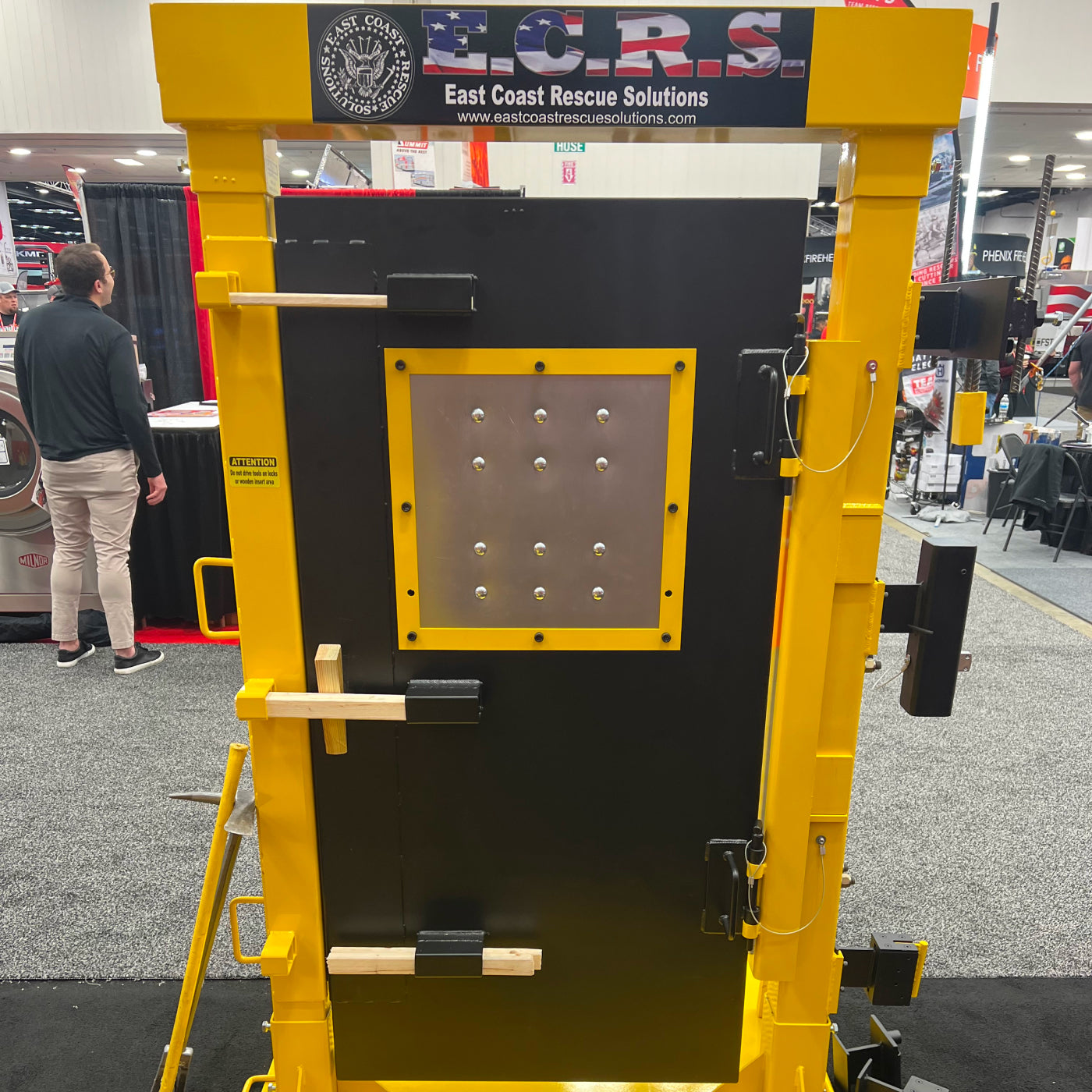
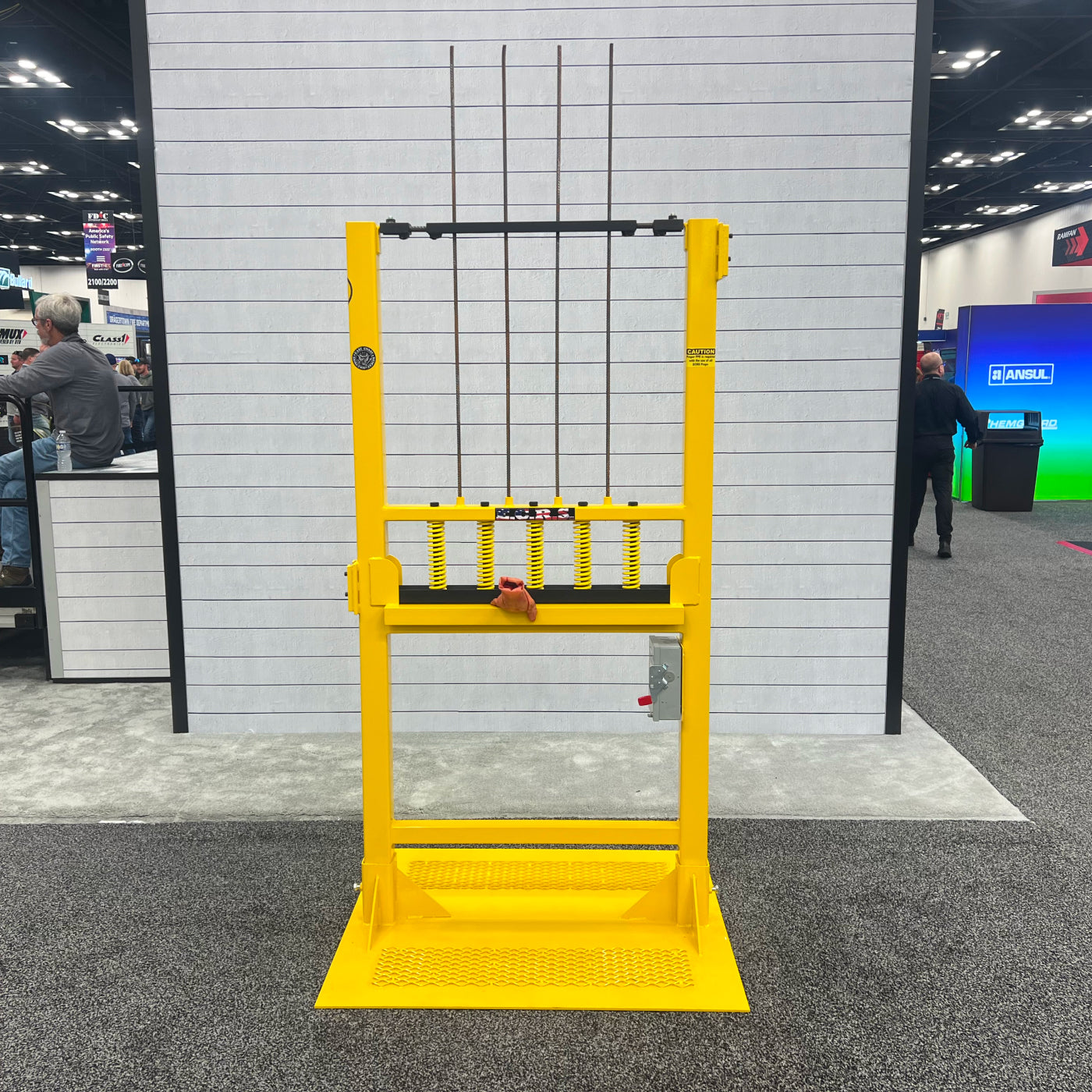
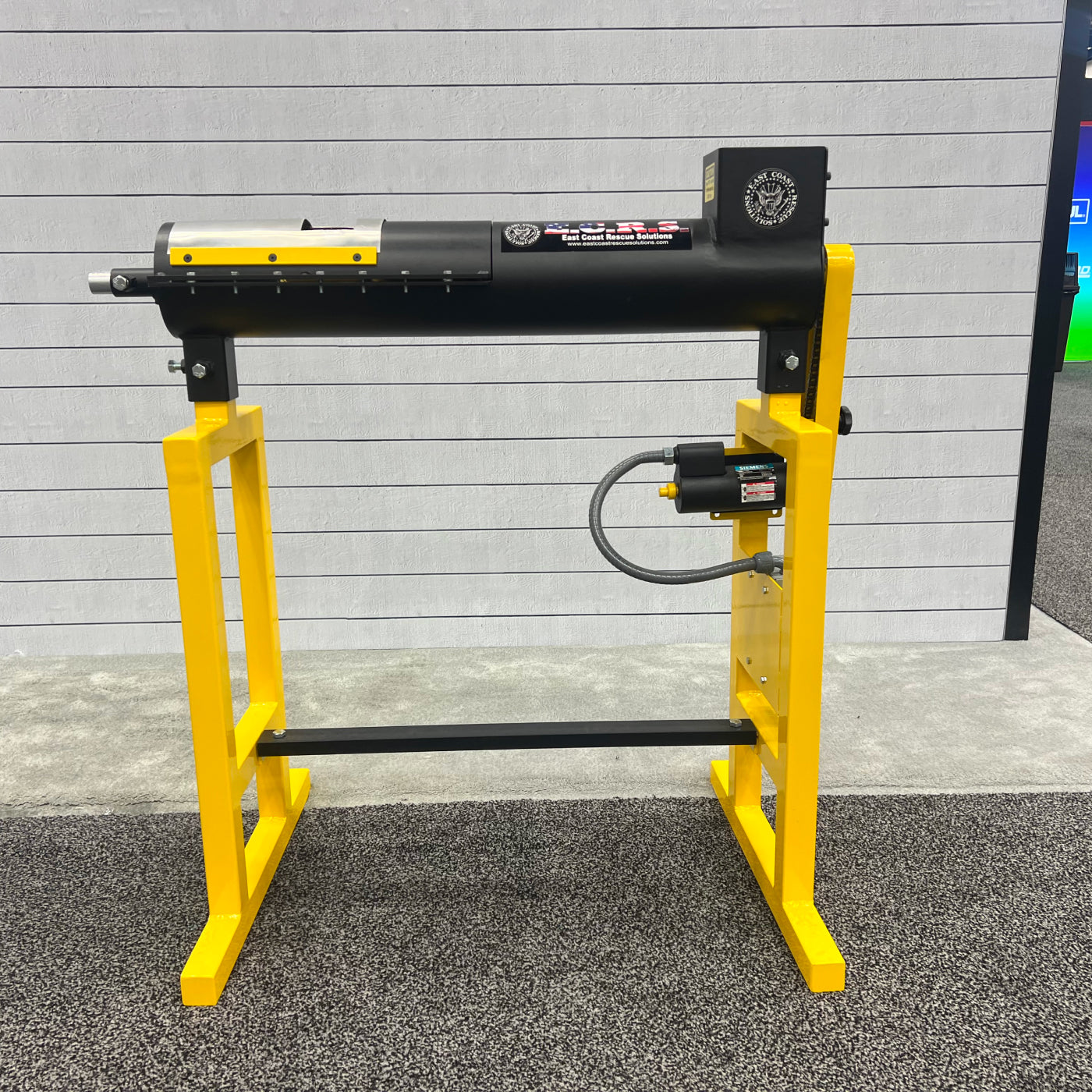
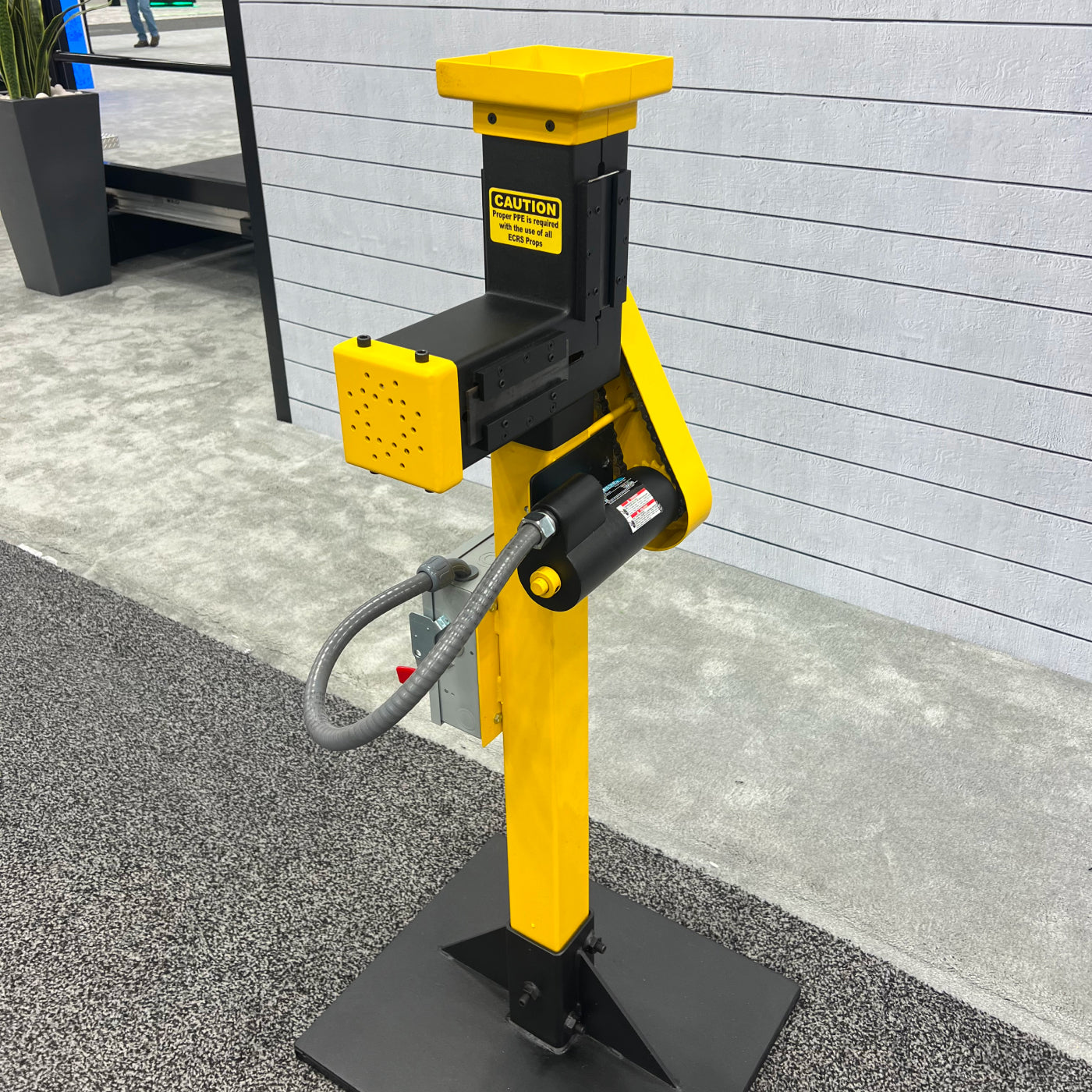
East Coast Rescue Solutions offers forcible entry door props for departments looking to incorporate hands-on entry training into their firefighter development programs.
When evaluating a forcible entry prop, the most important question isn't simply how difficult it is to open.
It's whether the equipment supports the techniques, repetitions, and instructional objectives the department needs.
A well-designed simulator combined with knowledgeable instruction can provide valuable opportunities to develop proficiency. But no training prop can compensate for instructors who overlook mechanical errors or reinforce unrealistic techniques.
A Practical Checklist for Forcible Entry Training Officers
Before concluding a training session, instructors can review the following questions.
|
Instructor question |
Why it matters |
|---|---|
|
Did firefighters perform an appropriate door assessment? |
Reinforces evaluation before tool application |
|
Were tool mechanics demonstrated correctly? |
Prevents strength from replacing technique |
|
Did firefighters maintain effective tool purchase? |
Helps identify poor positioning and loss of control |
|
Was progress preserved during the evolution? |
Reinforces the importance of managing partially completed forces |
|
Did team members communicate effectively? |
Supports coordination and safer tool operations |
|
Were unrealistic simulator shortcuts identified? |
Prevents prop-specific habits from becoming accepted techniques |
|
Did firefighters respond appropriately when their technique wasn't working? |
Develops adaptability |
|
Was door control incorporated where appropriate? |
Connects forcible entry with the broader operation |
|
Were recurring mistakes documented? |
Helps determine future training priorities |
This checklist doesn't need to become a lengthy administrative exercise.
Instructors can use it to guide observations and identify the most important corrections for each firefighter.
For more formal evaluations, departments can develop a standardized skills assessment based on their training policies and accepted procedures.
Final Thoughts: More Repetitions Don't Always Mean Better Training
Forcible entry training should prepare firefighters to solve unfamiliar mechanical problems under difficult conditions.
That requires more than becoming comfortable with a Halligan bar or learning how to defeat a particular training prop.
Firefighters need to understand door construction, recognize how their tools create mechanical advantage, maintain progress, communicate effectively, and adapt when the original approach doesn't work.
The most common training mistakes often develop when those fundamentals are overlooked.
A firefighter skips the assessment because the simulator is familiar. Another uses excessive strength to compensate for poor positioning. Another learns a shortcut that works only on the training equipment.
Over time, those habits may become ingrained through repeated practice.
Training officers can prevent many of these problems by establishing clear learning objectives, evaluating technique instead of speed alone, and explaining the differences between reusable simulators and actual door assemblies.
The goal of forcible entry training isn't to produce firefighters who can open the training door every time. It's to develop firefighters who understand why their techniques work, recognize when they don't, and know how to adapt.
That is the standard every department should strive for when developing its forcible entry training program.