





Every fire department has equipment it needs and equipment it would like to have. When budgets are tight, the distinction between the two becomes particularly important.
A forcible entry training door may seem like an obvious investment to the firefighters responsible for conducting training. They understand the importance of developing Halligan skills, practicing coordinated entry techniques, and preparing crews for difficult door configurations.
But to a fire chief responsible for managing apparatus replacement, PPE purchases, station maintenance, and dozens of other expenses, another piece of training equipment may not immediately appear to be a priority.
That doesn't necessarily mean the chief undervalues forcible entry training. It means the purchase must be justified alongside competing operational needs.
The strongest argument for purchasing a forcible entry training door isn't that firefighters need more equipment. It's that the department has an identifiable training deficiency and the equipment offers a practical way to address it.
Building that argument requires more than presenting a product brochure and asking for funding. Training officers need to demonstrate how the equipment will be used, who will benefit, what it will cost over time, and how the department will measure its value.
Start by Identifying the Training Problem, Not the Equipment You Want
One of the biggest mistakes firefighters make when proposing a purchase is beginning with the product itself.
They find a commercial forcible entry training prop, identify the features they like, and approach the chief with a request to buy it.
The problem is that a product description doesn't establish a departmental need.
A stronger proposal begins by examining the department's existing forcible entry training program.
Consider a department with 45 firefighters across three stations.
The department conducts annual forcible entry training at a regional training facility. During that session, firefighters practice basic Halligan techniques and complete a few evolutions on a commercial training prop.
Outside of that annual event, however, opportunities for hands-on practice are limited.
New firefighters may go several months without practicing against resistance. Experienced members may have little opportunity to maintain their skills.
The training officer doesn't necessarily need to convince the chief that forcible entry is important. The issue is demonstrating that the existing training schedule doesn't provide enough meaningful repetitions.
That is a much more compelling argument.
Questions worth answering before requesting funding
Before approaching the chief, review the current training program.
-
How often does each firefighter practice forcible entry using actual tools against resistance?
-
Does the department own a training prop, or does it rely on equipment borrowed from another department?
-
Are all shifts receiving comparable opportunities to practice?
-
Do firefighters have access to the equipment during routine station training?
-
Have instructors documented recurring problems with tool placement, maintaining purchase, or coordinating entry teams?
-
How much time and money does the department currently spend preparing, transporting, and replacing training materials?
The answers provide the foundation for a purchasing proposal.
Instead of saying, "We should buy a forcible entry door," the training officer can explain, "Our personnel currently receive limited hands-on forcible entry practice, and our existing training arrangements make it difficult to conduct regular skill maintenance."
The purchase then becomes a proposed solution to a documented operational problem.
Demonstrate Why Occasional Forcible Entry Training Isn't Enough
Forcible entry is a skill that requires more than understanding the correct sequence of movements.
Firefighters need to develop a feel for how their tools behave under resistance.
A firefighter can watch someone demonstrate Halligan placement and understand the concept of mechanical advantage without being proficient at applying it.
The difference becomes apparent when the firefighter attempts to establish purchase, coordinate with a striking-tool operator, or maintain progress against a secured door.
Those skills require hands-on practice and correction.
The question for department leadership is whether current training provides enough opportunities for firefighters to maintain proficiency.
Training frequency is only part of the equation
A department may conduct forcible entry training several times per year while still providing very few meaningful repetitions to individual firefighters.
For example, imagine a training session with 20 firefighters sharing one door prop over two hours.
After accounting for instruction, equipment resets, safety briefings, and discussion, each firefighter may only complete a handful of evolutions.
The training session may satisfy the department's schedule, but the available practice time could be insufficient for correcting individual skill deficiencies.
A department-owned simulator that can be incorporated into routine training may help address that limitation.
However, the training officer should avoid simply promising that purchasing equipment will improve proficiency.
The proposal needs to explain how the department intends to increase meaningful practice.
That might mean scheduling monthly company-level training, establishing quarterly skills evaluations, or incorporating forcible entry into recruit development.
The equipment creates the opportunity. The training program determines whether that opportunity produces results.
Calculate What the Department Currently Spends on Forcible Entry Training
Fire chiefs are accustomed to evaluating total costs, not just purchase prices.
A commercial forcible entry training door represents an upfront investment, but the comparison shouldn't stop there.
Departments should also consider what their existing training approach costs.
Using disposable doors and construction materials
Some departments construct temporary training setups using lumber, doors, and other building materials.
These can provide valuable training, particularly when instructors want firefighters to experience how actual construction materials deform and fail.
However, those setups may require replacement materials and significant preparation between exercises.
Depending on the design, instructors may need to rebuild portions of the assembly after each evolution.
That involves both material expenses and personnel time.
A reusable training simulator may reduce some of those recurring costs, although it will have its own maintenance and replacement-component expenses.
The relevant question is not whether a commercial simulator eliminates all training costs. It is whether it provides an appropriate combination of training value, durability, and operating expense.
Traveling to another training facility
Departments that don't own forcible entry equipment may depend on county academies, neighboring departments, or regional training centers.
These arrangements can be effective, but they may limit scheduling flexibility.
A department might have access to an excellent training facility but only be able to schedule visits a few times annually.
Training may also require additional coordination, travel, and removal of personnel from their normal station assignments.
Those indirect costs should be included when evaluating the benefits of owning equipment.
Instructor preparation and reset time
Training officers also need to account for the work required to prepare an evolution.
If an instructor spends substantial time rebuilding a training assembly between repetitions, that time cannot be spent observing firefighters and correcting technique.
A commercial simulator that supports efficient resetting may allow more time for instruction.
However, reset procedures vary between products. Departments should ask manufacturers for demonstrations or written information rather than assuming all training props can be reset equally quickly.
How to Calculate the Cost Per Training Evolution
One practical way to help a chief understand the value of a training prop is to estimate its cost over several years of use.
Instead of presenting only the purchase price, calculate the approximate cost per training evolution.
Consider a hypothetical department evaluating a commercial forcible entry training door.
Illustrative figures only—not East Coast Rescue Solutions pricing or a manufacturer durability claim.
|
Expense |
Estimated cost |
|---|---|
|
Initial simulator purchase |
$7,500 |
|
Freight and initial setup |
$500 |
|
Replacement components over five years |
$1,500 |
|
Maintenance allowance over five years |
$500 |
|
Five-year total |
$10,000 |
Now assume the department conducts 24 training sessions per year, with an average of 20 completed evolutions per session.
That produces:
-
480 training evolutions annually.
-
2,400 training evolutions over five years.
-
An estimated equipment cost of approximately $4.17 per evolution.
The figure doesn't include personnel time, facility expenses, or every potential operating cost. It also assumes the equipment remains serviceable throughout the period.
Nevertheless, it gives leadership a useful way to evaluate the proposed investment.
A $7,500 purchase may initially appear difficult to justify. A projected five-year cost of $4.17 per evolution provides additional context.
The assumptions matter
Training officers should not inflate expected usage just to make the calculation look attractive.
If the department realistically expects to conduct only six training sessions annually, the cost per evolution will be considerably higher.
That doesn't automatically mean the purchase is unjustified, but it changes the financial argument.
The most credible proposal uses realistic utilization estimates supported by a written training schedule.
Compare Equipment Ownership With the Alternatives
A chief may reasonably ask why the department needs to purchase a commercial simulator when other training options already exist.
That question deserves a serious answer.
A commercial forcible entry training door is not necessarily the best choice for every department.
The appropriate solution depends on the number of firefighters, existing facilities, instructor availability, and the type of training the department needs.
|
Training option |
Potential advantages |
Limitations to consider |
|---|---|---|
|
Commercial reusable simulator |
Repeatable training, predictable setup, dedicated equipment |
Upfront purchase and ongoing maintenance |
|
Department-built prop |
Can be customized, potentially lower initial expense |
Requires fabrication, inspection, maintenance, and replacement materials |
|
Disposable doors and frames |
Provides experience with actual construction materials |
Rebuilding costs and preparation time |
|
Shared regional simulator |
Distributes purchase costs across departments |
Scheduling, transportation, and storage requirements |
|
Regional training academy |
Access to instructors and established training facilities |
Limited scheduling flexibility and possible travel requirements |
A strong purchasing proposal acknowledges these alternatives rather than dismissing them.
For example, a small volunteer department with limited annual training may find that sharing equipment with neighboring departments is more practical than purchasing its own simulator.
A larger department with several shifts and an active recruit program may benefit more from having equipment available regularly.
The purchasing decision should reflect how the department operates.
Explain How the Equipment Will Improve Training Access
One of the strongest arguments for a department-owned forcible entry simulator is the ability to integrate hands-on practice into regular training.
A training prop stored at a central academy may be useful during scheduled training days.
But what about firefighters working a 24-hour shift who have a short window available for company-level training?
What about a recruit who needs additional practice with Halligan placement?
What about a crew that identifies a deficiency during an after-action review and wants to work on that skill during its next scheduled training period?
Having equipment available locally can make those situations easier to address.
Build a proposed training schedule
Don't simply tell the chief that the simulator will be used frequently.
Show when it will be used.
A department might propose the following schedule:
|
Training activity |
Proposed frequency |
Objective |
|---|---|---|
|
Recruit forcible entry fundamentals |
During recruit development |
Establish tool proficiency |
|
Company-level forcible entry drills |
Monthly |
Maintain skills and correct deficiencies |
|
Multi-company entry scenarios |
Quarterly |
Improve communication and coordination |
|
Individual skills evaluations |
Semiannually |
Document proficiency |
|
Instructor development |
As scheduled |
Maintain consistent training practices |
These are examples, not universally required frequencies.
The actual schedule should reflect staffing, operational requirements, and departmental training policies.
Once the schedule is established, the training officer can estimate how many firefighters will use the equipment and how many meaningful repetitions it will support.
This connects the purchase to a realistic operational plan.
Make the Case for Standardized Forcible Entry Training
Consistency is another consideration that may appeal to department leadership.
Without a structured training program, different shifts or instructors may teach slightly different approaches to the same skill.
One company might emphasize tool positioning and mechanical advantage.
Another might concentrate on completing the evolution as quickly as possible.
A third might have limited access to equipment and rely primarily on demonstrations.
A dedicated training simulator can provide a consistent environment for evaluating certain skills.
That doesn't mean every firefighter should be taught to force every door in exactly the same way.
Real-world door construction requires adaptability.
However, departments can establish common expectations for fundamental skills such as door assessment, tool positioning, maintaining purchase, communication, and door control.
The simulator provides a repeatable platform for instructors to observe those skills.
The department can then document performance and identify areas requiring additional instruction.
This type of measurable training program is generally easier to defend during budget discussions than a proposal based primarily on providing more opportunities for practice.
Address Safety Without Making Unsupported Claims
Firefighter safety is an important reason to maintain proficiency in forcible entry.
However, purchasing proposals should avoid exaggerated claims about what a particular training prop will accomplish.
For example, it would be difficult to substantiate a statement that buying a forcible entry simulator will reduce firefighter injuries by a specific percentage.
The equipment itself does not guarantee better outcomes.
A more defensible argument is that structured training provides an opportunity to develop and evaluate tool proficiency in a controlled environment before firefighters encounter comparable challenges during emergency operations.
The NFPA 1400 Standard on Fire Service Training, 2026 edition, addresses requirements for fire service training, including facilities and associated training props.
When proposing a simulator, departments should review the applicable standards and their own safety procedures, particularly where training equipment setup, inspection, and instructor supervision are concerned.
Equipment should also be selected and used according to the manufacturer's instructions.
Training officers can strengthen their proposal by explaining how the simulator will fit into existing safety and instructor oversight procedures.
Can Fire Departments Get Grants for Forcible Entry Training Equipment?
For departments struggling with limited equipment budgets, grant funding may provide another avenue for purchasing training equipment.
One program worth investigating is FEMA's Assistance to Firefighters Grants (AFG) program.
The U.S. Fire Administration's fire service grants and funding resource provides information about federal funding opportunities for eligible fire service organizations.
AFG is intended to help eligible organizations improve their ability to protect firefighters and the public through equipment, training, and other qualifying activities.
The FY 2025 AFG program rules also address training props under certain conditions, but that does not mean every forcible entry simulator purchase automatically qualifies for funding.
What should a department include in a grant justification?
A proposal should explain the training need and demonstrate how the requested equipment will address it.
Useful supporting information may include the number of firefighters requiring training, deficiencies in existing equipment, limitations on current training access, and the planned frequency of use.
For example, a department might document that its firefighters depend on an outside training facility and cannot consistently conduct hands-on forcible entry drills.
The department could then explain how a dedicated simulator would support a structured training program.
A grant application should also address training objectives, the planned implementation schedule, and how the department will evaluate results.
Departments should review the current notice of funding opportunity, applicable priorities, cost-sharing requirements, and equipment eligibility rules before applying.
Grant eligibility and program priorities can change between funding cycles.
Don't overlook local funding opportunities
Federal grants aren't the only potential funding source.
Depending on the jurisdiction, departments may also investigate local government capital budgets, state fire service grants, regional training partnerships, community foundations, and other legitimate funding programs.
Some departments may be able to coordinate purchases with neighboring agencies or demonstrate that the equipment will support a regional training program.
The most appropriate funding source depends on the department's ownership structure, local rules, and available programs.
What Should You Look for Before Requesting a Quote?
A chief evaluating a purchase is likely to ask questions about equipment longevity, maintenance, storage, and ongoing expenses.
Training officers should be prepared with answers.
That means evaluating more than the simulator's appearance or advertised capabilities.
Durability and construction
A forcible entry training door should be appropriate for the intensity and frequency of the department's planned training.
Ask the manufacturer about the materials used in the simulator, which components are subject to wear, and what inspection or maintenance procedures are recommended.
Avoid assuming that a heavier simulator is automatically more durable or more realistic.
Construction quality needs to be evaluated alongside the intended training applications.
Training capabilities
Departments should determine whether the simulator supports the types of skills they intend to teach.
For example, can it be used to practice the door configurations relevant to the department's response area?
Does it support the required tool applications?
Can instructors adjust training conditions, if that capability is important to the program?
These questions should be answered using documented product specifications or demonstrations.
Reset and maintenance requirements
A simulator that is difficult to reset may limit the number of repetitions firefighters can complete during a training period.
Ask what is required between evolutions, whether replacement components are necessary, and what ongoing maintenance involves.
Space and storage
Some training props require dedicated floor space or specific conditions for safe setup and operation.
Departments should confirm the equipment's dimensions, weight, storage needs, and installation requirements.
For a station with limited available space, these details may be just as important as the purchase price.
Total delivered cost
The final purchasing proposal should account for applicable freight, setup, replacement components, and other anticipated expenses.
Comparing equipment based only on its listed purchase price can lead to an incomplete budget.
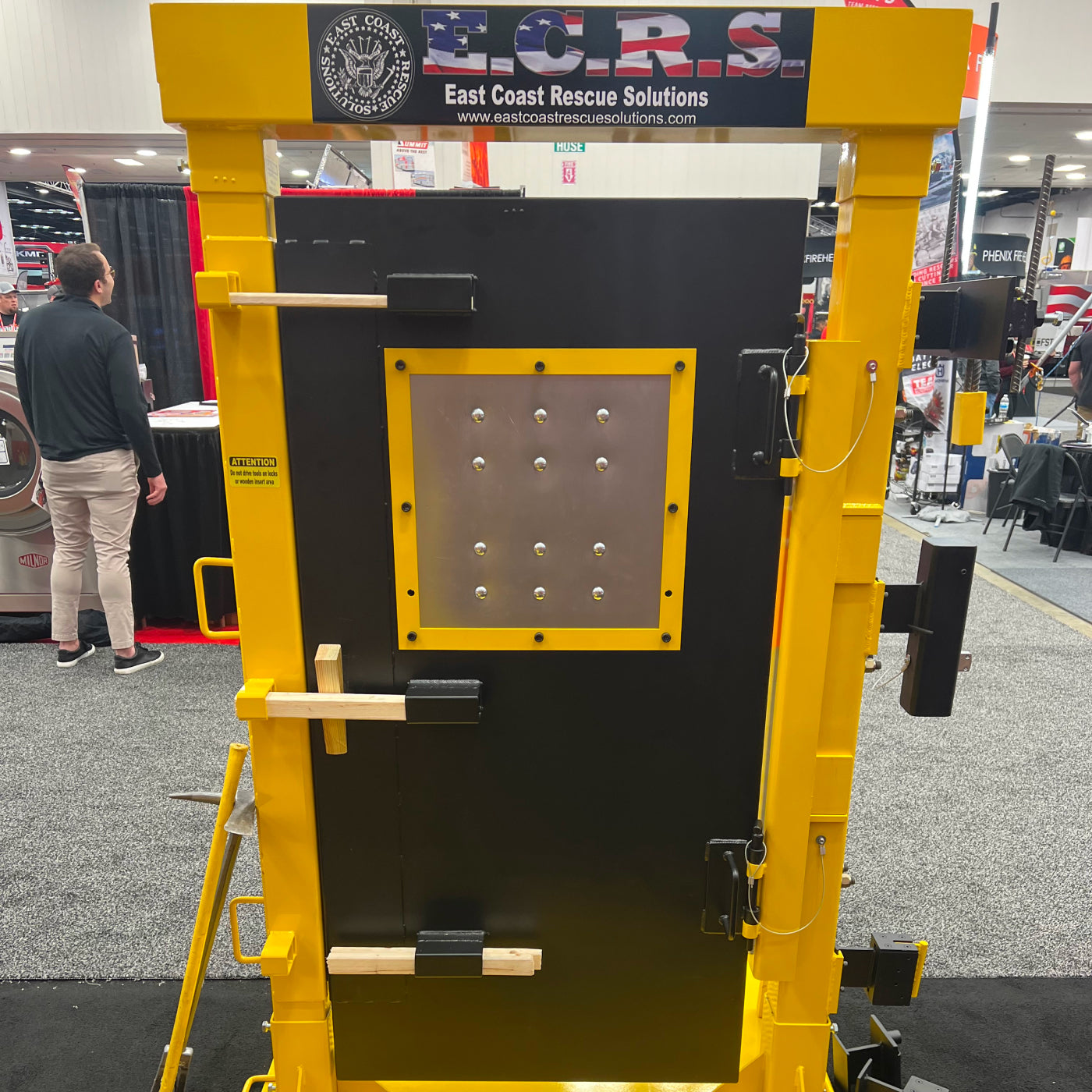
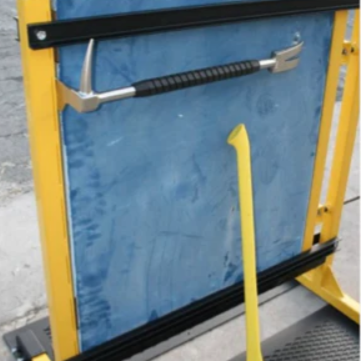
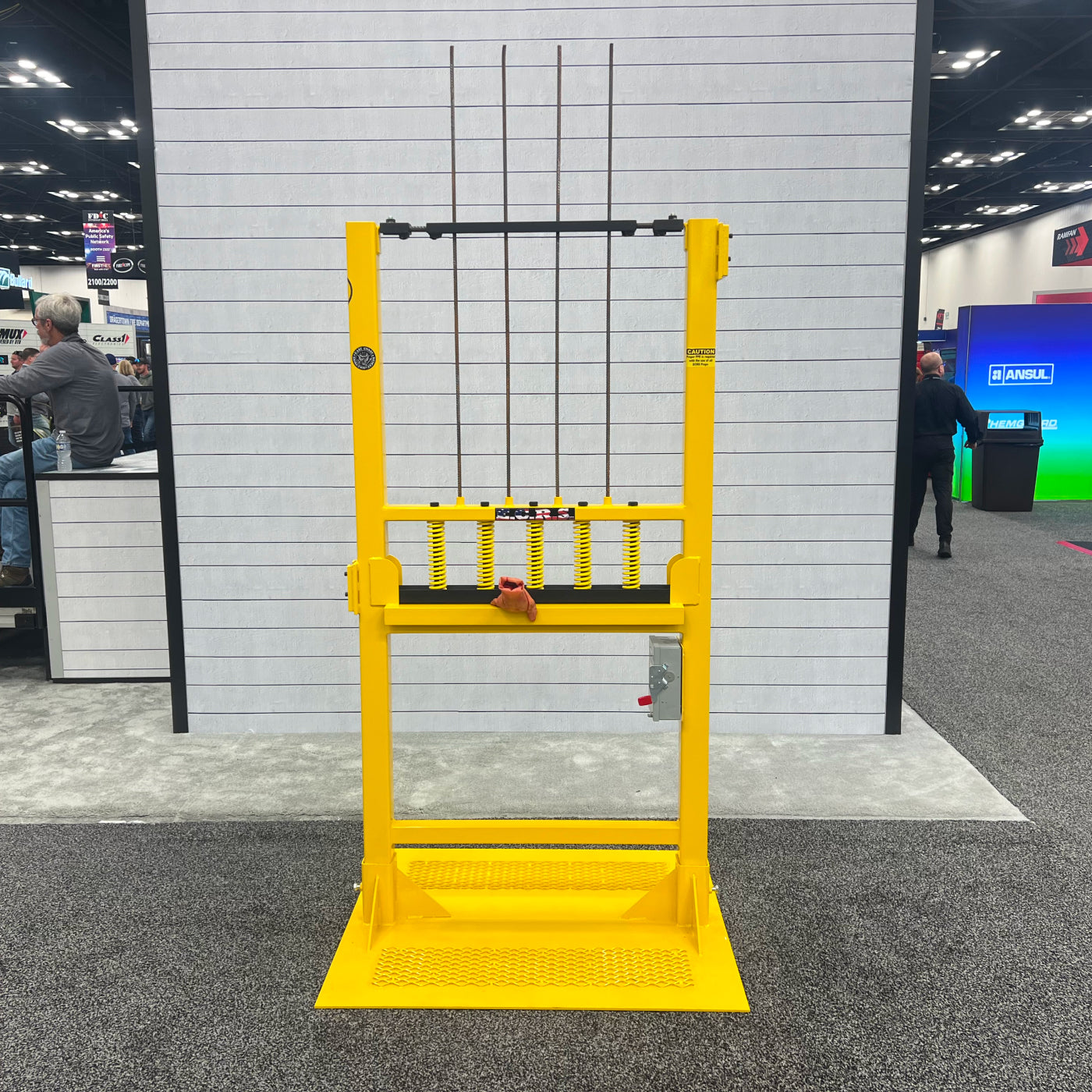
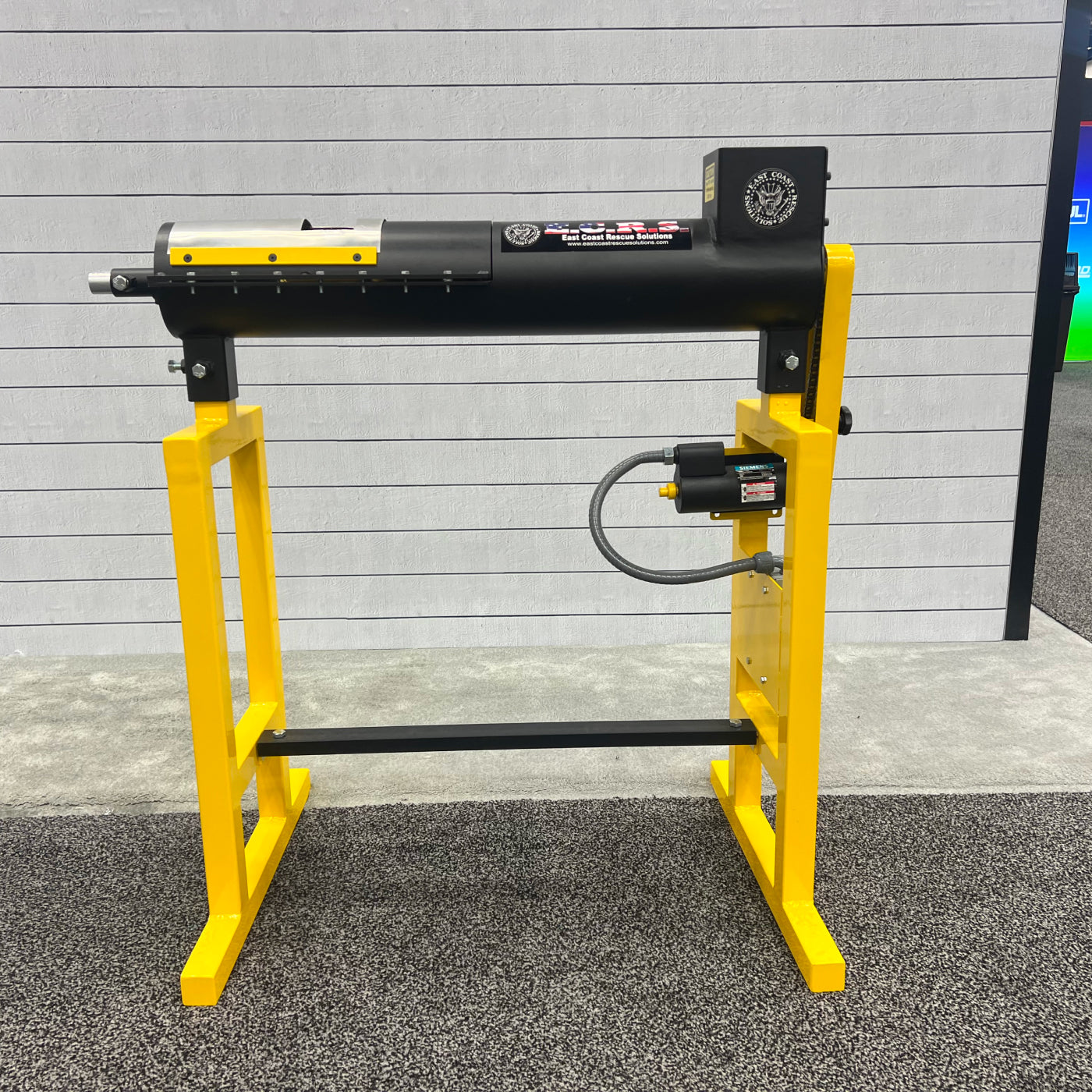
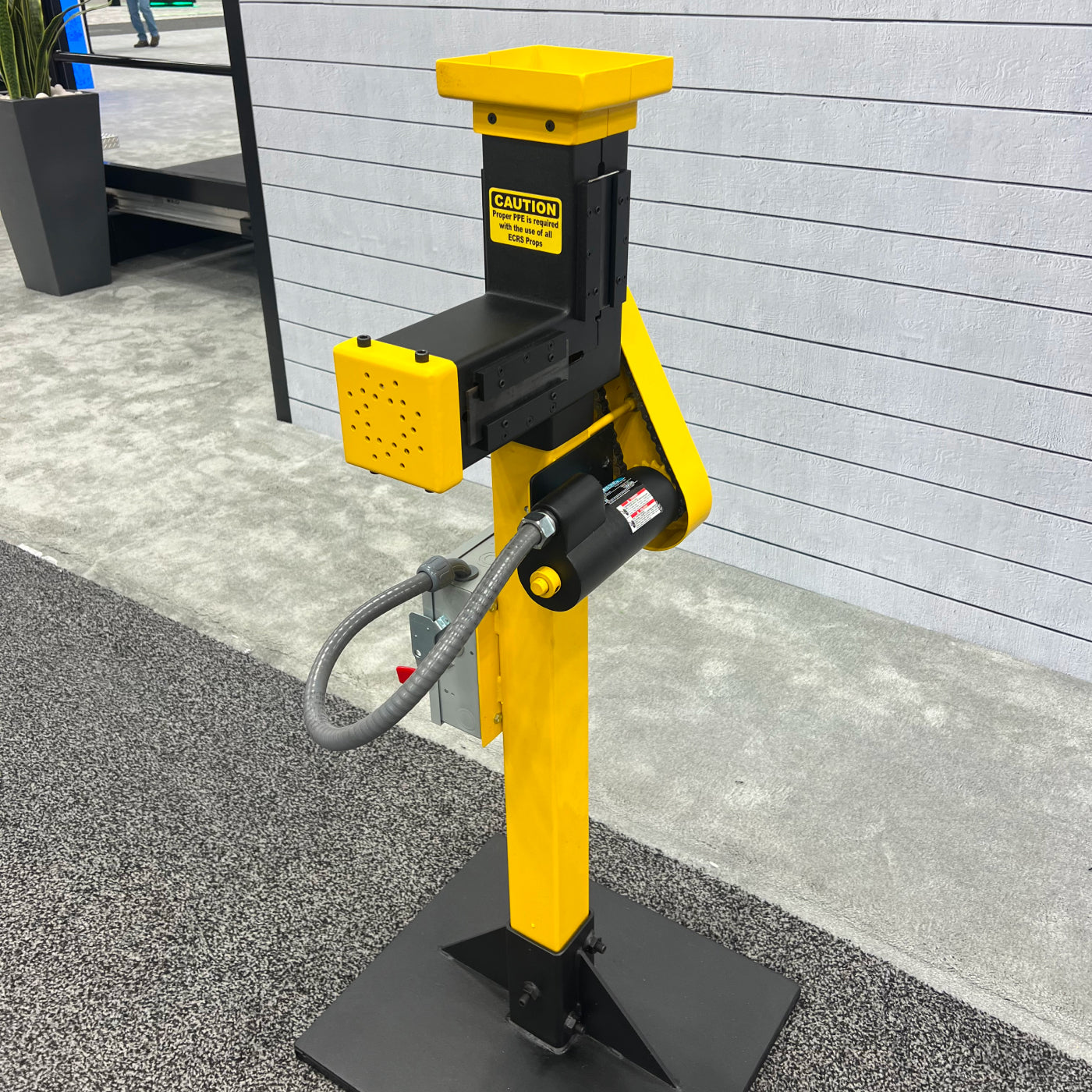
For departments researching options, East Coast Rescue Solutions offers forcible entry training doors and simulators for hands-on firefighter training.
A detailed equipment quote and an understanding of the simulator's actual capabilities can help training officers prepare a more complete purchasing request.
How to Present the Proposal to Your Fire Chief
Once the training need, equipment options, and costs have been evaluated, the next step is presenting the information clearly.
A chief should not have to search through a lengthy product brochure to understand why the purchase is being requested.
A concise proposal can often be organized around five questions.
What is the current problem?
Describe the training deficiency using information the department can verify.
For example:
"Our department currently conducts hands-on forcible entry training twice annually. Access to training equipment is limited, making it difficult to provide consistent practice across shifts."
What is the proposed solution?
Identify the type of equipment being requested and how it would be incorporated into training.
"We propose purchasing a reusable forcible entry training simulator to support monthly company-level drills and scheduled recruit training."
What will it cost?
Provide the equipment quote, freight, necessary accessories, and projected maintenance expenses.
Where practical, include an estimate of five-year operating costs.
How will the equipment be used?
Present a training schedule showing how often the equipment will be available and who will use it.
Include any anticipated instructor development or equipment familiarization requirements.
How will the department measure whether the purchase was worthwhile?
This is often the most overlooked portion of a purchasing proposal.
The department should identify performance indicators it can reasonably track.
Examples include the number of completed training sessions, firefighter participation rates, individual skills evaluations, and documented improvements in specific techniques.
These measurements don't prove that the equipment will prevent incidents or injuries, but they help leadership determine whether it is being used effectively.
A Sample Forcible Entry Training Door Purchase Justification
The following example illustrates how a training officer might summarize the request.
SAMPLE PURCHASE JUSTIFICATION
Equipment Request: Reusable Forcible Entry Training Door
Current training deficiency
Our department has limited access to reusable forcible entry training equipment. Current training arrangements restrict the frequency of hands-on practice and make it difficult to provide consistent skill development across all shifts.
Proposed solution
Purchase a commercial forcible entry training simulator for use in recurring company-level training, recruit development, and periodic skills evaluations.
Anticipated benefits
-
More opportunities for hands-on tool practice.
-
Consistent training conditions for evaluating fundamental skills.
-
Reduced dependence on borrowed equipment or temporary training setups.
-
Greater flexibility when scheduling training across shifts.
-
A reusable training platform for both recruit and continuing education.
Implementation plan
The training division will develop a schedule for monthly hands-on drills, quarterly scenario-based training, and periodic skills assessments.
Budget
Final costs will be based on vendor quotes, including freight, necessary accessories, and anticipated replacement components.
Performance evaluation
The department will track equipment utilization, training attendance, completed evolutions, and skills assessment results during the first 12 months.
Requested action
Approve funding for a reusable forcible entry training simulator to address identified training deficiencies and improve access to practical skills development.
This format can be adapted to an internal purchasing request, municipal budget proposal, or supporting documentation for certain grant applications.
It also gives a fire chief enough information to evaluate the request without requiring an extensive review of the training equipment market.
What if the Chief Still Says No?
Even a well-supported proposal may not receive immediate approval.
A department could have significant apparatus expenses, pending building repairs, or other operational priorities that take precedence.
A denied request doesn't necessarily mean the equipment will never be purchased.
It may mean the timing or funding source needs to change.
Training officers should ask what additional information would help leadership reconsider the request.
Would a more detailed cost comparison be useful? Could the purchase be included in next year's capital budget? Would a shared arrangement with another department be more realistic?
In the meantime, instructors should continue developing the training program using available resources.
They can document participation, identify skill deficiencies, track the cost of disposable training materials, and evaluate alternative training arrangements.
If the purchase is reconsidered later, the department will have stronger information to support the request.
Perhaps most importantly, training officers should avoid presenting the simulator as the only way to conduct effective forcible entry training.
Departments can develop valuable skills using various training methods. A commercial simulator is one tool that may improve the consistency and availability of hands-on practice.
That is a credible argument without overstating what the equipment can accomplish.
Final Thoughts: Make the Case for the Training Program, Not Just the Door
A forcible entry training door can represent a substantial expense, especially for volunteer departments or agencies operating under tight budgets.
But the value of the equipment shouldn't be judged solely by its initial purchase price.
A department needs to consider how frequently firefighters will use it, the skills it will help develop, the recurring costs of alternative training methods, and whether the equipment can support a sustainable training program.
The strongest purchasing proposals begin with a documented training deficiency and explain how the requested equipment will address it.
They include realistic cost estimates, a defined implementation schedule, and a method for evaluating results.
A fire chief doesn't need to be convinced that a new training door looks impressive. The chief needs to understand why the department needs it, how it will be used, and what value it provides over time.
When a proposal answers those questions, the discussion changes from buying another piece of equipment to investing in a measurable training capability.