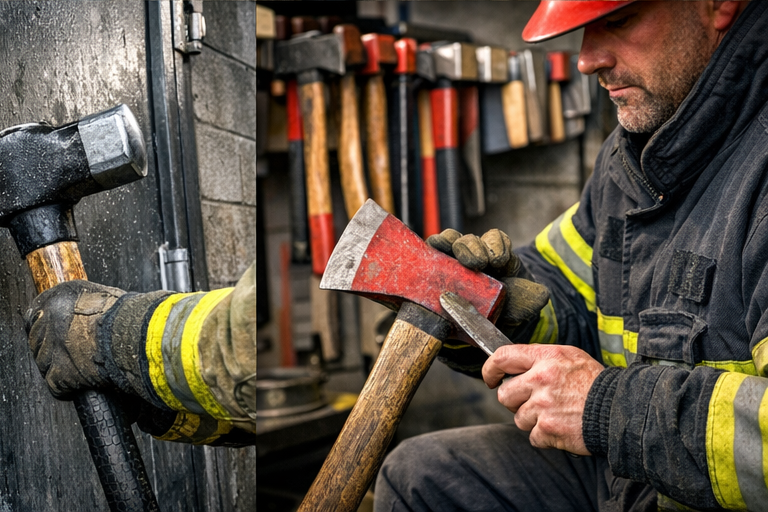



Forcible entry is often taught around a single primary tool, most commonly the Halligan. While the Halligan is undeniably versatile, relying on it as the default solution for every entry scenario can limit effectiveness. Modern doors, frames, and locking systems are specifically designed to resist leverage, which means there are many situations where impact tools are the more appropriate choice.
Axes and mauls are designed to deliver concentrated force directly into the resistance point. When leverage cannot be established or is quickly defeated by reinforced construction, impact becomes the fastest and most reliable option.
Understanding the Difference Between Leverage and Impact
The key distinction between a Halligan and an axe or maul lies in how they defeat resistance. A Halligan works by creating mechanical advantage. An axe or maul works by transferring force.
When you rely on leverage, you need:
-
Space to set the tool
-
A material that will flex or separate
-
Time to work the resistance
Impact tools remove those requirements. A controlled strike can deform, fracture, or displace material immediately, which is why axes and mauls remain essential in many forcible entry situations.
When a Halligan Alone Becomes Inefficient
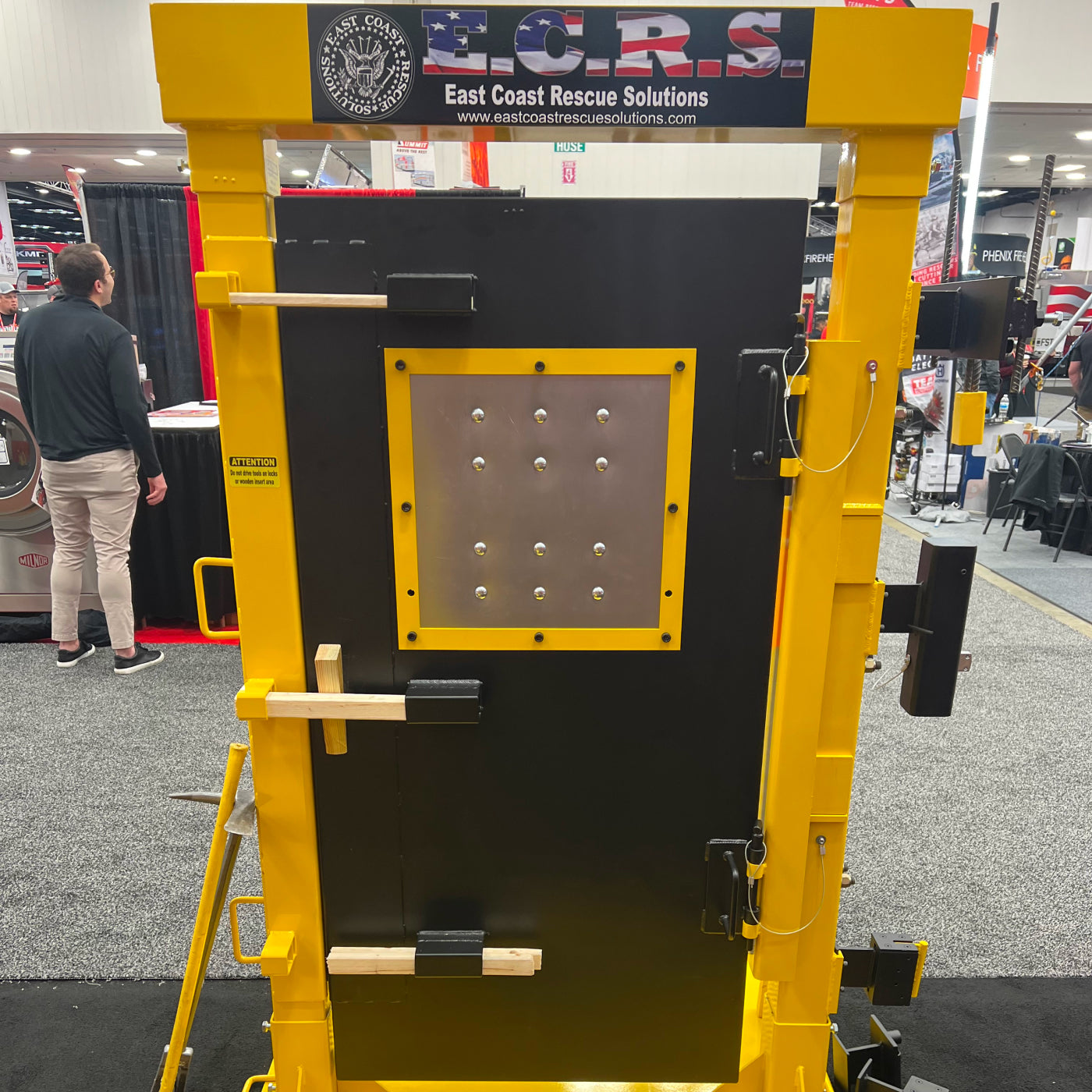
There are specific scenarios where leverage-based entry becomes inefficient or ineffective. Heavily reinforced doors, steel frames, and security hardware are often engineered to absorb prying forces without failing. In these cases, repeated leverage attempts can waste time and increase firefighter fatigue without producing results.
You often see this on:
-
Commercial steel-frame doors
-
Doors with reinforced strike plates
-
Security doors with layered hardware
In these situations, applying force directly to the frame or locking area with an axe or maul can quickly change the conditions in your favor.
Why Axes and Mauls Excel on Reinforced Doors
Impact tools are particularly effective against reinforced assemblies because they disrupt the integrity of the system rather than trying to work around it. A well-placed strike can bend a frame, crack welds, or compromise mounting points that were designed to resist prying.
Mauls are especially useful here due to their mass. Instead of relying on swing speed alone, they allow you to deliver force in a more controlled manner, which is valuable when working close to other firefighters or operating in tight spaces.
The Role of Axes and Mauls in Tool Combinations
Axes and mauls are rarely used in isolation during forcible entry. One of their most important roles is enabling other tools to work effectively. Driving a Halligan into a tight gap requires a striking tool that can seat the adz or fork deep enough to create leverage.
Without an appropriate axe or maul:
-
Purchase points are harder to establish
-
Tool slippage becomes more likely
-
Entry time increases
In this context, the axe or maul is not a secondary tool—it is the force that makes the system work.
Choosing Impact Over Leverage Under Time Pressure
When conditions are deteriorating or victims are reported, speed matters. Impact tools allow you to bypass incremental progress and apply decisive force. That does not mean uncontrolled striking; effective axe and maul use relies on accuracy, discipline, and understanding where force will be most effective.
Choosing impact first can reduce overall tool movement, limit unnecessary damage, and shorten the time required to gain entry.
Why Axes and Mauls Still Matter in Modern Forcible Entry
Advancements in door and frame construction have not reduced the need for axes and mauls. In many cases, they have increased it. Reinforced materials, impact-rated doors, and security upgrades often demand tools capable of delivering controlled force.
By understanding when an axe or maul is the better choice, you expand your forcible entry options and improve operational efficiency across a wider range of scenarios.